For the past several years, manufacturers have been told the same strategic message:
Bring production closer to home.
Driven by trade tensions, tariff volatility, geopolitical fragmentation, and supply chain disruptions, companies across manufacturing, industrials, and automotive sectors have accelerated:
- nearshoring
- friendshoring
- regionalization strategies
On paper, the logic is compelling:
- shorter supply chains
- lower geopolitical exposure
- improved resilience
- faster delivery cycles
But in 2026, a dangerous assumption is emerging beneath this movement:
“Local” does not automatically mean “compliant.”
And for many organizations, reshoring is quietly creating a new category of governance risk — one that is less visible, less mature, and potentially more difficult to audit than the global systems companies are trying to replace.
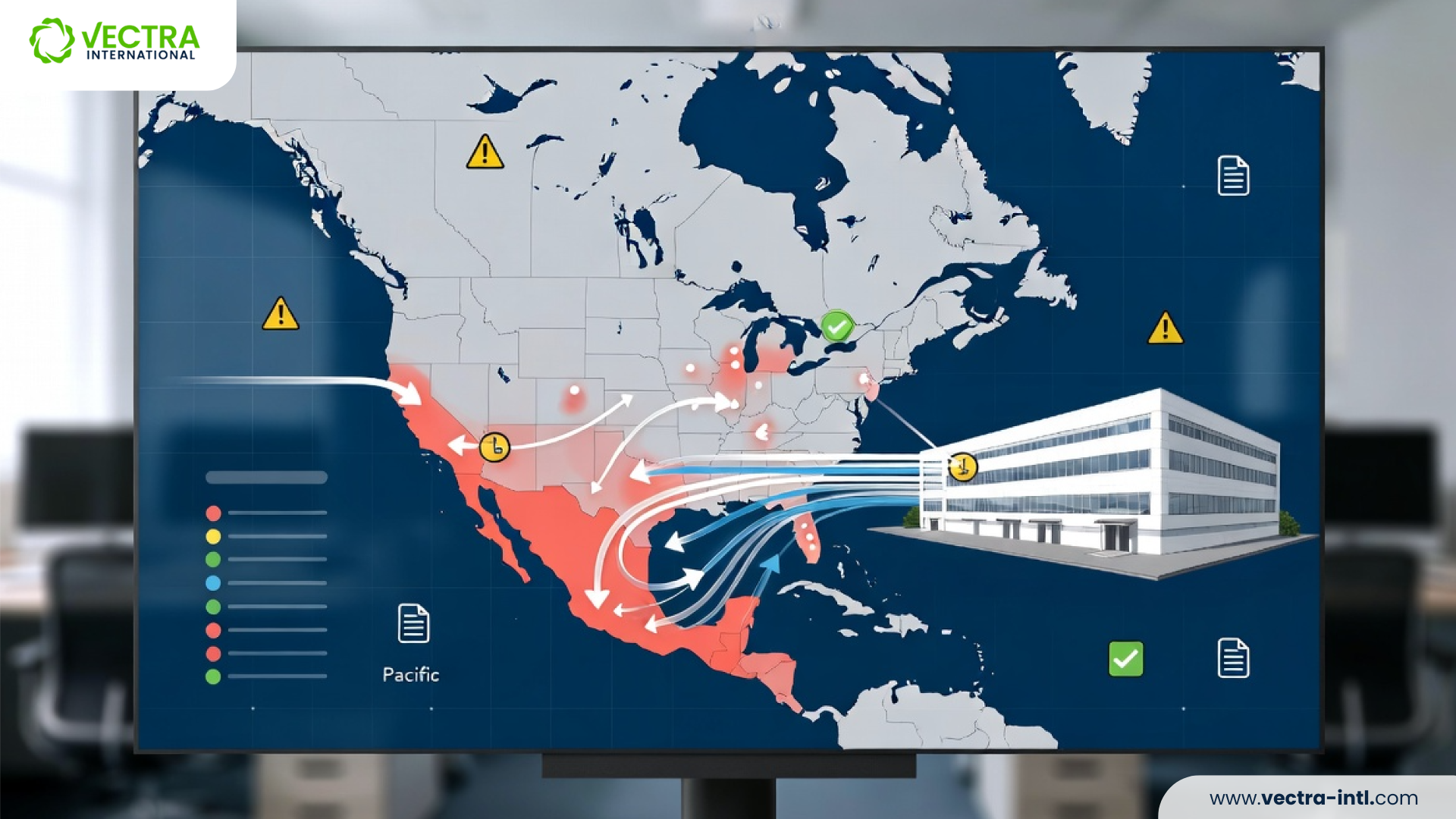
The Strategic Trigger: Tariffs, Trade Barriers, and Regional Supply Chains
The push toward regional manufacturing hubs has intensified due to:
- rising tariffs
- export restrictions
- industrial policy incentives
- geopolitical decoupling pressures
Companies are increasingly shifting operations toward:
- Mexico
- Eastern Europe
- Southeast Asia
- North African manufacturing corridors
The objective is understandable:
reduce dependence on politically sensitive or distant supply chains.
But speed is creating vulnerability.
In the rush to regionalize operations, many organizations are onboarding suppliers faster than their governance systems can evaluate them.
The False Sense of Security Around “Nearshore” Suppliers
One of the biggest misconceptions in reshoring is this:
proximity equals lower risk.
In reality, many new regional suppliers:
- have limited ESG maturity
- lack sophisticated reporting infrastructure
- operate with weaker internal controls
- possess minimal audit readiness capabilities
Ironically, some long-established global suppliers may actually have:
- stronger sustainability governance
- better compliance systems
- more mature traceability processes
- higher audit sophistication
Because they have spent years adapting to international scrutiny.
New regional suppliers often have not.
The Hidden Governance Gap
The governance challenge created by reshoring is subtle but significant.
When companies onboard new suppliers rapidly, they often focus heavily on:
- production capacity
- logistics efficiency
- cost competitiveness
- tariff advantages
But governance controls lag behind.
This creates blind spots in:
- ESG reporting accuracy
- labor compliance verification
- environmental monitoring
- supplier documentation quality
- internal control maturity
The result:
organizations believe they have reduced geopolitical risk while simultaneously increasing governance exposure.
Why 2026 Makes This More Dangerous
In previous years, governance gaps might have remained manageable.
In 2026, they are becoming regulator-facing liabilities.
Because multiple pressures are converging:
- ESG disclosure requirements
- forced labor enforcement
- supply chain traceability mandates
- audit assurance expectations
- localized reporting obligations
This means weak supplier governance is no longer just an operational issue.
It is now:
- a compliance risk
- an audit risk
- a reputational risk
- a production continuity risk
The Automotive and Industrial Challenge
The automotive and industrial sectors face particularly acute exposure.
Why?
Because modern manufacturing supply chains involve:
- hundreds of suppliers
- deep material dependencies
- highly specialized regional subcontractors
- complex tiered sourcing networks
A single governance failure at a regional supplier can affect:
- production schedules
- customs clearance
- ESG reporting integrity
- customer certifications
And increasingly, regulators are asking organizations to demonstrate:
not just supplier oversight —
but evidence of continuous governance monitoring.
The Audit Readiness Problem Nobody Talks About
Many companies assume supplier governance can be addressed later through periodic audits.
That assumption is becoming dangerous.
Because new regulatory environments require organizations to respond quickly to:
- regulator inquiries
- customer due diligence requests
- audit assurance testing
- forced labor investigations
- supply chain transparency reviews
If a regional supplier cannot provide:
- verifiable records
- emissions data
- labor documentation
- material traceability
- governance evidence
…the problem becomes yours.
Not theirs.
The New Risk Model: Governance Fragmentation
One unintended consequence of reshoring is the fragmentation of governance standards.
Global suppliers often operated under:
- unified compliance systems
- centralized reporting protocols
- mature audit frameworks
Regional supplier ecosystems are often far less standardized.
This creates inconsistent:
- ESG methodologies
- documentation quality
- risk management practices
- transparency levels
For multinational companies, this inconsistency creates a major assurance challenge:
How do you maintain enterprise-level governance across rapidly changing regional supply networks?
Why Localized Risk Assessments Are Becoming Essential
Traditional supplier risk models often rely on:
- country-level risk scoring
- annual assessments
- broad ESG questionnaires
That is no longer sufficient.
Organizations now need:
Localized Risk Intelligence
Meaning:
- facility-specific risk analysis
- regional regulatory mapping
- localized labor risk assessment
- infrastructure reliability analysis
- geopolitical exposure tracking
Because two suppliers within the same country may carry radically different governance risks.
Rapid-Response Audit Readiness Is the New Competitive Advantage
The companies best positioned for 2026 will not simply be those with regionalized supply chains.
They will be the ones capable of:
- validating supplier controls quickly
- producing audit-grade evidence rapidly
- monitoring regional risks continuously
- escalating governance issues in real time
This requires a shift from:
static supplier onboarding
To:
continuous governance assurance
Strategic Priorities for 2026
1. Re-Audit New Regional Suppliers
Do not assume regional proximity equals maturity.
Treat reshored suppliers as high-risk until validated.
2. Build Localized Governance Frameworks
Global standards must be adapted to regional realities:
- labor norms
- environmental enforcement
- documentation practices
- infrastructure constraints
3. Implement Continuous Supplier Monitoring
Annual assessments are too slow for geopolitical volatility.
Organizations need:
- ongoing risk scoring
- real-time compliance alerts
- dynamic supplier oversight
4. Stress-Test Audit Readiness
Ask:
- Could this supplier survive a regulator review tomorrow?
- Could they provide evidence within 48 hours?
- Are their controls verifiable?
If not, resilience is incomplete.
5. Integrate Governance Into Reshoring Decisions
Nearshoring should not be evaluated solely through:
- logistics
- tariffs
- cost reduction
Governance maturity must become a core selection criterion.
The Bigger Shift: Resilience Is No Longer Geographic
For years, resilience was viewed primarily as a geography problem:
“Move production closer to reduce risk.”
But 2026 is proving something different.
Resilience is increasingly:
- data-driven
- governance-driven
- audit-driven
A shorter supply chain with weak governance may actually be more fragile than a longer one with mature controls.
Final Thought: The New Supply Chain Question Is “Can You Prove Control?”
The reshoring movement is not slowing down.
But the companies that succeed will not be those that move fastest.
They will be the ones that maintain:
- visibility
- governance consistency
- audit readiness
- supplier accountability
—even as supply chains become more regionalized.
Because in 2026, the core question is no longer:
“Where is your supply chain located?”
It is:
“Can you prove you still control it?”
View Related Posts
How Can Startups Build “Compliance by Design” Without Slowing Down Growth?
Post-Hormuz Logistics: The Rise of “Chokepoint Governance”