Why Supply Chains Must Move Beyond Efficiency to Structural Resilience
In April 2026, a familiar vulnerability re-emerged with renewed force.
The energy and shipping disruption in the Strait of Hormuz—one of the world’s most critical maritime chokepoints—sent immediate shockwaves through global supply chains:
- Shipping rates spiked by over 25% within weeks
- Energy prices surged across dependent markets
- Transit times became unpredictable
- Inventory planning assumptions collapsed
For many organizations, the disruption felt sudden.
But the underlying risk was not new.
What has changed is how leadership is expected to respond.
Boards are no longer asking:
“How do we manage this disruption?”
They are asking:
“Why were we exposed to a single point of failure in the first place?”
This marks a fundamental shift—from reactive logistics management to proactive chokepoint governance.
The End of “Just-in-Time” as a Default Strategy
For decades, supply chains were optimized for:
- Efficiency
- Cost reduction
- Speed
The “Just-in-Time” model became the dominant paradigm:
- Minimize inventory
- Reduce working capital
- Streamline flows
This approach worked in a relatively stable geopolitical environment.
But today’s landscape is fundamentally different:
- Trade routes are increasingly politicized
- Regional conflicts create sudden bottlenecks
- Infrastructure dependencies are concentrated in key nodes
In this context, efficiency alone is no longer a competitive advantage.
It is a vulnerability.
The Reality of Chokepoints in Global Trade
Chokepoints are not rare exceptions.
They are structural features of global logistics.
Examples include:
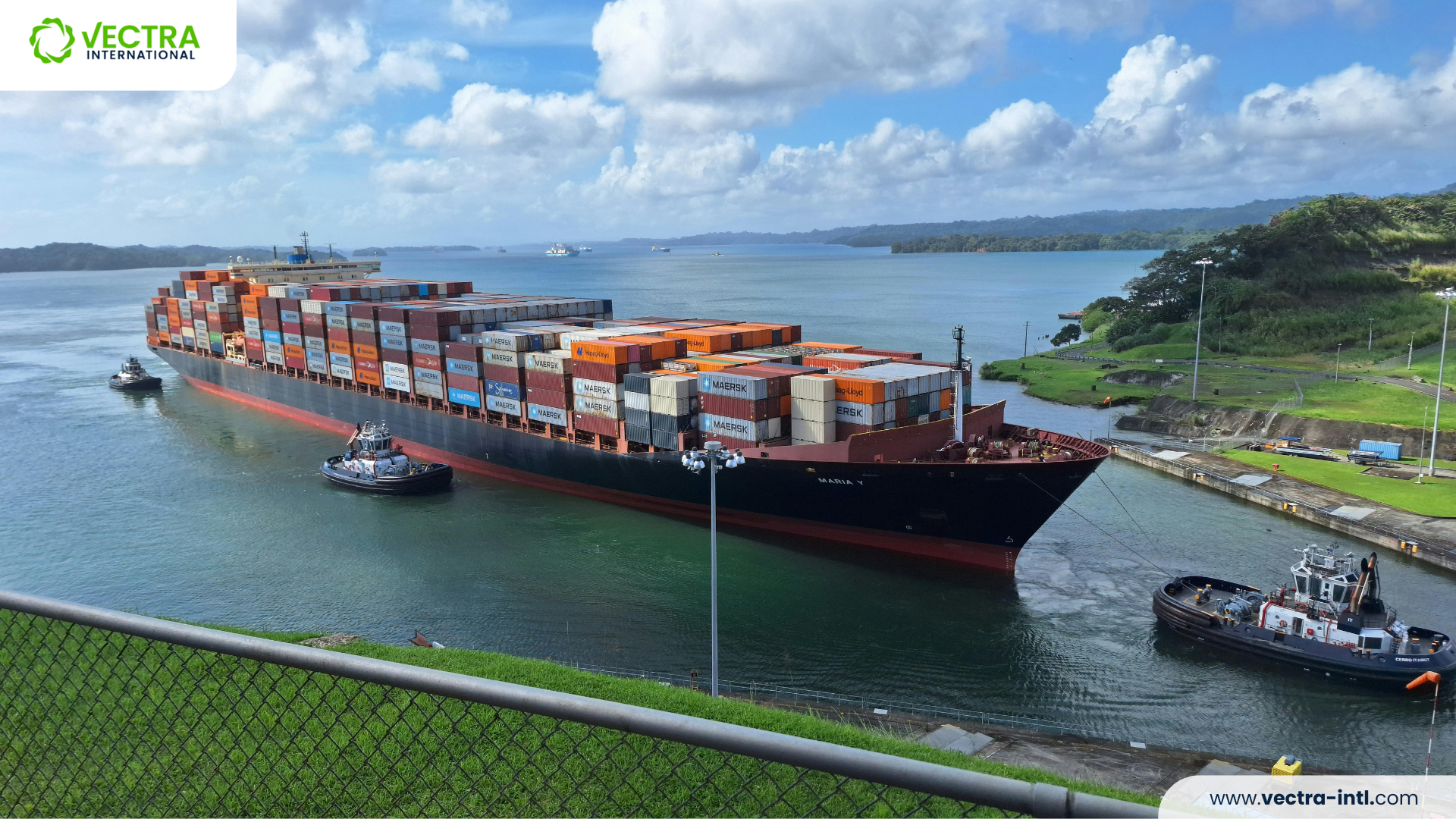
- Maritime corridors (Strait of Hormuz, Suez Canal, Panama Canal)
- Key ports and transshipment hubs
- Rail gateways and border crossings
- Critical supplier clusters
These nodes share common characteristics:
- High traffic concentration
- Limited alternative routes
- Significant geopolitical exposure
When disrupted, their impact is:
- Immediate
- System-wide
- Difficult to mitigate quickly
The Hidden Risk: Concentration Without Visibility
Many organizations are unaware of the extent of their exposure.
Why?
Because traditional supply chain visibility focuses on:
- Tier-1 suppliers
- Direct logistics providers
- Contractual relationships
What it often misses:
- Upstream dependencies
- Shared infrastructure across suppliers
- Hidden convergence points in transport routes
For example:
- Multiple suppliers in different countries may rely on the same shipping corridor
- Diversified sourcing may still converge at a single port
- Alternative routes may not exist at scale
This creates a false sense of diversification.
In reality:
The system remains concentrated—and fragile.
From Risk Awareness to Chokepoint Governance
The next evolution in supply chain strategy is not just identifying risk.
It is governing it structurally.
Chokepoint governance means:
- Mapping where critical dependencies exist
- Quantifying exposure to specific nodes
- Designing alternatives before disruption occurs
This is not a tactical adjustment.
It is a strategic capability.
Introducing the “Chokepoint Audit”
To operationalize this shift, organizations need a new tool:
The Chokepoint Audit
Unlike traditional supply chain assessments, which focus on suppliers or cost structures, a chokepoint audit focuses on flow dependencies.
It answers three critical questions:
1. Where Are Our Critical Nodes?
Identify:
- Ports, routes, and infrastructure that are essential to operations
- Points where multiple supply streams converge
2. What Is Our Exposure?
Assess:
- Volume dependency on each node
- Availability of alternative routes
- Time and cost implications of disruption
3. What Is Our Mitigation Strategy?
Define:
- Pre-approved alternative pathways
- Buffer strategies (inventory, sourcing, routing)
- Decision protocols for rapid response
The Shift to “Geopolitically-Buffered” Supply Chains
In response to chokepoint risk, a new model is emerging:
Geopolitically-buffered supply chains
This approach prioritizes:
- Redundancy over pure efficiency
- Flexibility over optimization
- Visibility over assumption
Key elements include:
- Multi-route logistics planning
- Regional diversification of supply
- Strategic inventory buffers at critical nodes
- Scenario-based planning for geopolitical events
This is not about abandoning efficiency.
It is about balancing efficiency with resilience.
The VECTRA International Advantage: Making Hidden Dependencies Visible
Chokepoint governance depends on one critical capability:
Deep, multi-layered visibility across the supply chain
This is where VECTRA International provides a strategic edge.
1. Mapping Beyond Tier-1
VECTRA enables organizations to:
- Trace supply chains across multiple tiers
- Identify shared infrastructure dependencies
- Reveal hidden convergence points
This transforms perceived diversification into actual diversification.
2. Integrating Trade and Logistics Intelligence
Chokepoint risk is not just about location.
It involves:
- Trade regulations
- Customs flows
- Transport networks
VECTRA integrates these dimensions to provide:
- Holistic visibility
- Context-aware risk assessment
3. Real-Time Monitoring of Critical Nodes
Static maps are not enough.
Conditions change rapidly.
VECTRA supports:
- Continuous monitoring of key routes and hubs
- Early warning signals for disruptions
- Dynamic risk scoring
4. Enabling Strategic Scenario Planning
With the right data, organizations can:
- Model disruption scenarios
- Evaluate alternative strategies
- Predefine response plans
This turns uncertainty into manageable risk.
The New Board-Level Question
The April 2026 Hormuz disruption has changed the conversation at the top.
Executives are now being asked:
- Where are our single points of failure?
- How quickly can we reroute critical flows?
- What is the cost of disruption vs the cost of resilience?
These are not operational questions.
They are strategic governance questions.
The Cost of Inaction
Organizations that fail to adopt chokepoint governance face:
- Repeated disruption cycles
- Escalating logistics costs
- Reduced service reliability
- Loss of competitive positioning
Most importantly, they risk being perceived as:
Unprepared in an increasingly volatile world
A Practical Path Forward
To build chokepoint resilience, organizations should focus on four priorities:
1. Conduct a Chokepoint Audit
Identify and map critical dependencies across the supply chain.
2. Build Multi-Route Capabilities
Ensure viable alternatives exist for key flows.
3. Integrate Data Across Functions
Align logistics, procurement, and risk management systems.
4. Embed Resilience into Strategy
Make chokepoint governance a core part of decision-making.
Final Thought: Resilience Is Now a Design Principle
The era of optimizing supply chains purely for efficiency is over.
The future belongs to organizations that:
- Understand their structural vulnerabilities
- Design for disruption, not just performance
- Govern risk proactively
With its expertise in supply chain visibility, trade intelligence, and data-driven risk management, VECTRA International is uniquely positioned to support this transformation.
Because in a world defined by geopolitical uncertainty, the question is no longer:
“How efficient is your supply chain?”
It is:
“How resilient is it when the critical nodes fail?”
View Related Posts
The 2040 Target: Why Your 2030 Sustainability Roadmap Just Became Obsolete
Agentic AI in Logistics: The New Frontier of Governance Risk