The EUDR compliance deadline is rapidly approaching. Following the European Union’s implementation timeline, medium and large operators must comply with the EU Deforestation Regulation (EUDR) by December 30, 2026.
For agribusinesses trading commodities such as cocoa, coffee, cattle, soy, palm oil, rubber, and wood, the challenge is no longer understanding the regulation—it is proving compliance through verifiable supply chain data, geolocation mapping, and robust due diligence processes.
Organizations that delay preparation may face regulatory penalties, shipment delays, and restricted access to EU markets.
Understanding the EUDR Compliance Deadline
The EUDR requires companies placing regulated commodities and derived products on the EU market to demonstrate that those products:
- Are deforestation-free
- Comply with local production laws
- Are supported by robust due diligence documentation
The regulation represents one of the most significant supply chain transparency requirements introduced by the European Union.
With the December 2026 deadline approaching, agribusinesses must ensure that their compliance programs are operational well before enforcement begins.
Why Supplier Promises Are No Longer Enough
Historically, many companies relied on supplier questionnaires, certifications, and contractual commitments to manage sustainability risks.
Under EUDR, this approach is no longer sufficient.
Businesses must be able to demonstrate:
- Farm-level geolocation data
- Supply chain traceability
- Verified sourcing information
- Risk assessment procedures
- Due diligence documentation
Regulators are increasingly focused on evidence-based compliance rather than self-declarations.
Organizations that cannot provide adequate documentation may face shipment delays, regulatory penalties, or market access restrictions.
Geolocation Mapping Is Becoming Essential
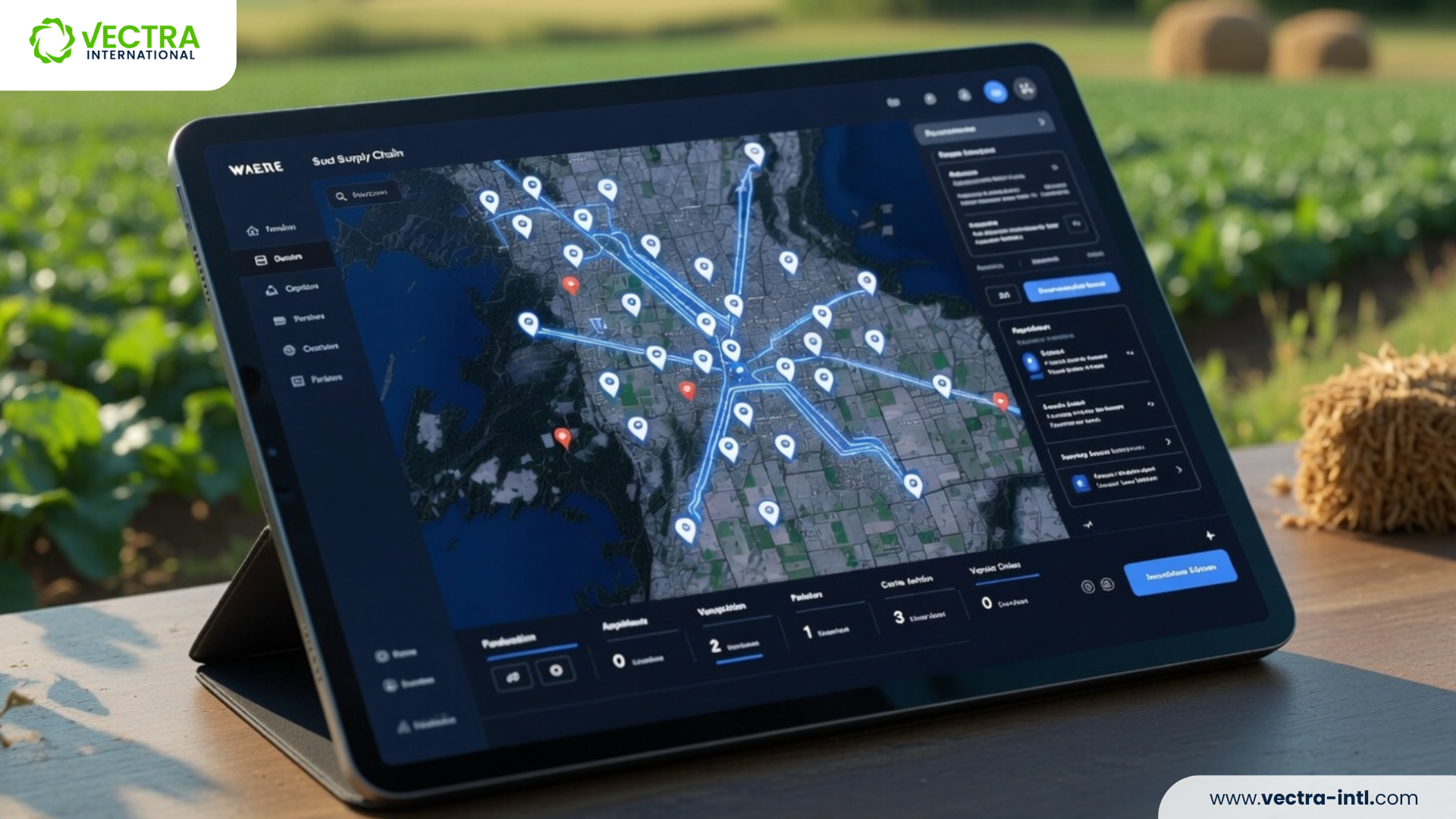
One of the most challenging aspects of EUDR compliance is geolocation mapping.
Companies must identify and verify the exact origin of regulated commodities throughout their supply chains.
This requires businesses to:
- Map farms and production sites
- Collect geographic coordinates
- Validate supplier data
- Monitor sourcing regions for deforestation risks
For organizations sourcing from multiple countries and thousands of smallholder farms, this process can be highly complex.
However, accurate geolocation data will become a fundamental requirement for demonstrating EUDR compliance.
Understanding the New Role of Downstream Operators
Recent EUDR updates have introduced a new category for downstream operators, helping streamline how compliance reference numbers move through supply chains.
While the first operator placing products on the EU market often carries the primary filing responsibility, downstream companies cannot assume that compliance obligations disappear.
Businesses must maintain:
- Verified chains of custody
- Accurate reference numbers
- Reliable supplier records
- Ongoing due diligence processes
The ability to trace products back to their origin will remain essential throughout the supply chain.
Building a Stronger Due Diligence Framework
Organizations preparing for the EUDR compliance deadline should focus on strengthening three key areas:
1. Supply Chain Transparency
Gain visibility beyond direct suppliers and understand where commodities originate.
2. Farm-Level Data Collection
Develop processes for gathering and validating geolocation and production information.
3. Risk-Based Due Diligence
Identify sourcing regions with elevated deforestation risks and implement mitigation measures where necessary.
Companies that begin this work now will be significantly better positioned when enforcement begins.
Turning EUDR Compliance into a Competitive Advantage
Although EUDR introduces new reporting obligations, it also creates an opportunity for organizations to improve supply chain governance and sustainability performance.
Businesses with transparent and traceable sourcing programs are likely to benefit from:
- Stronger customer trust
- Improved supply chain resilience
- Reduced regulatory risk
- Enhanced ESG performance
- Greater market access opportunities
The companies that succeed under EUDR will be those that move beyond compliance and build genuinely transparent supply chains.
Final Thoughts
The December 2026 EUDR compliance deadline is approaching quickly. Agribusinesses that delay preparation risk significant operational and regulatory challenges when enforcement begins.
Success will depend on more than supplier assurances. Organizations must establish robust due diligence processes, implement geolocation mapping, and maintain verifiable supply chain records capable of withstanding regulatory scrutiny.
At VECTRA International, we help agribusinesses improve farm-level performance, strengthen supply chain transparency, and develop practical compliance strategies that support EUDR readiness and long-term sustainability goals.
Frequently Asked Questions About EUDR
When does EUDR come into force?
Medium and large companies must comply with the EUDR by December 30, 2026.
What commodities are covered by EUDR?
The regulation covers cocoa, coffee, cattle, soy, palm oil, rubber, wood, and certain derived products.
What is geolocation mapping under EUDR?
Geolocation mapping requires businesses to identify and verify the exact origin of commodities using geographic coordinates and farm-level data.
Do downstream operators have EUDR obligations?
Yes. While reporting responsibilities may differ, downstream operators must maintain traceability, reference numbers, and due diligence records.
What happens if a company is not compliant?
Organizations may face regulatory penalties, shipment delays, customs issues, and restricted access to EU markets.
Why is supply chain traceability important for EUDR?
Traceability helps companies prove that products are deforestation-free and meet the regulation’s due diligence requirements.
View Related Posts
Would Your Supply Chain Survive the 2026 Ban on the Destruction of Unsold Goods?
How Can AI Agents Transition Your Risk Monitoring from “Periodic” to “Continuous” This Year?
VECTRA International is a global expert in Supply Chain Risk & Responsibility. We positively impact businesses, their workers, and communities by helping create better, more efficient supply chain workplaces.
Chaussée de Wavre 1517B, 1160 Brussels, Belgium
A Note on Our Visuals: At VECTRA, we combine human expertise with advanced technology. Some of the supportive imagery in this article was generated using artificial intelligence tools like Google Gemini. We ensure all conceptual AI assets align with our brand standards and accurately reflect our data.