For years, the destruction of unsold inventory has been treated as an uncomfortable but manageable cost of doing business.
Excess apparel burned.
Returned footwear shredded.
Unsold stock quietly removed from the market.
That model is ending.
On July 19, 2026, the European Union’s Regulation (EU) 2024/1781 will prohibit the destruction of unsold apparel and footwear for many companies operating in the EU market.
At first glance, this appears to be a sustainability initiative focused on reducing waste.
In reality, it is something much bigger:
An operational stress test for modern supply chains.
Because once companies can no longer dispose of excess inventory, they must answer a far more difficult question:
“Do we actually know where our products are, where they are going, and what happens to them after they remain unsold?”
For many retailers and consumer goods companies, the answer is: not completely.
The Hidden Crisis Behind Unsold Inventory
The destruction ban exposes a structural weakness that has existed for years beneath the surface of retail operations:
- Poor demand forecasting
- Fragmented inventory visibility
- Weak reverse logistics systems
- Uncontrolled secondary distribution channels
Historically, destruction acted as a release valve for operational inefficiencies.
Excess stock could simply disappear.
Now it cannot.
That changes the economics — and the risk profile — of inventory management entirely.
This Is Not Just an ESG Issue
Many organizations are approaching the regulation through a sustainability lens alone.
That is a mistake.
The real issue is supply chain integrity.
If unsold inventory cannot legally be destroyed, companies must establish:
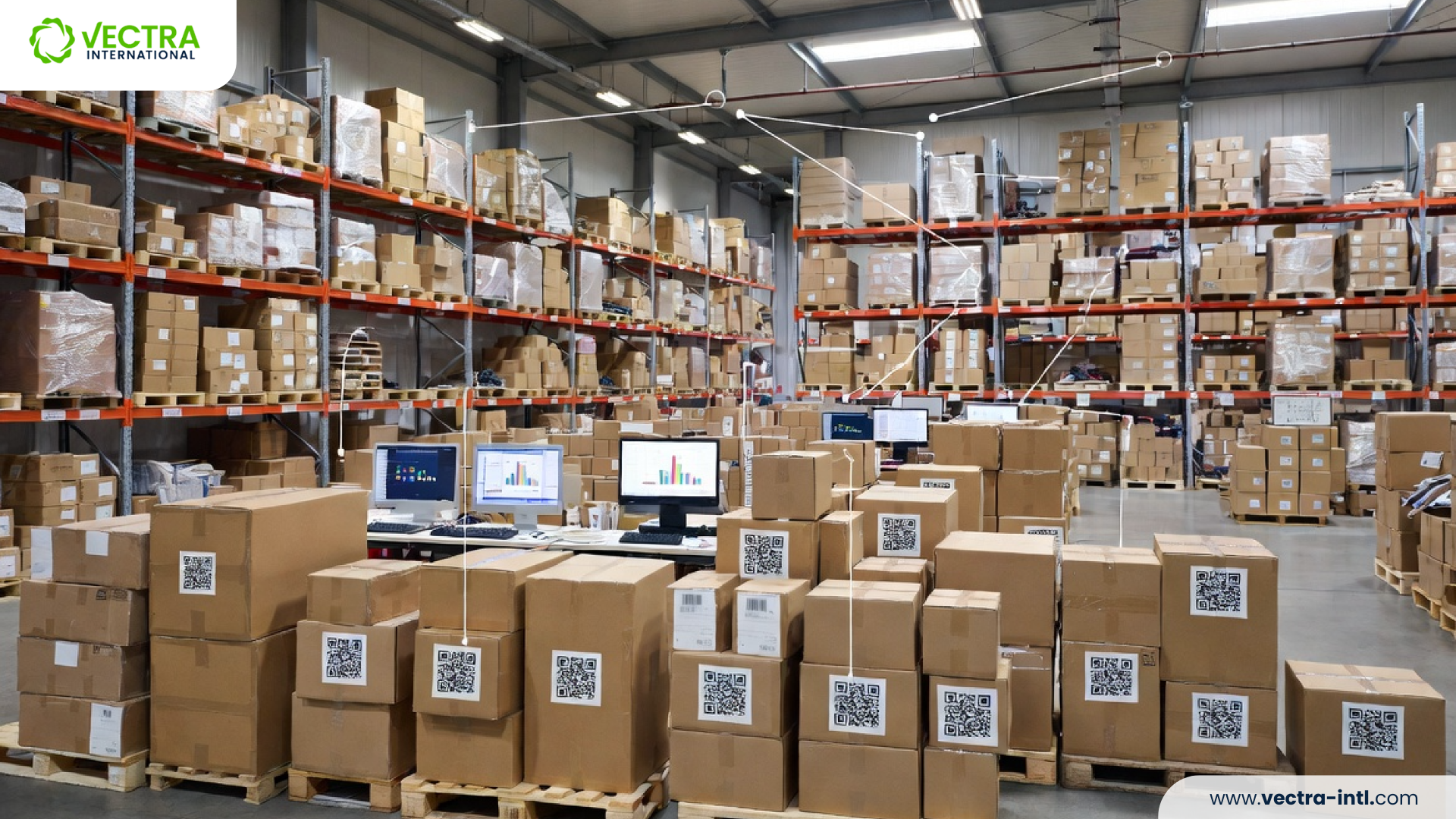
- Traceability of excess stock
- Controlled redistribution pathways
- Verified resale, recycling, or donation channels
Without this visibility, organizations face new forms of exposure:
- Regulatory penalties
- Grey market leakage
- Counterfeit substitution risks
- Brand dilution in unauthorized markets
The challenge is no longer:
“How do we dispose of unsold goods?”
It is:
“How do we maintain control of them after primary demand fails?”
The Rise of the Secondary Market Risk
One of the least discussed consequences of the 2026 ban is the expansion of secondary market complexity.
When unsold goods leave traditional retail channels, they often enter:
- Liquidation networks
- Off-price distributors
- Export markets
- Informal resale ecosystems
Without robust tracking systems, brands may lose visibility almost immediately.
This creates dangerous scenarios:
- Premium products appearing in unauthorized regions
- Discounted inventory undermining pricing strategy
- Products being relabeled or diverted
- Counterfeit goods mixing into legitimate secondary flows
In this environment, inventory opacity becomes both a compliance risk and a brand protection risk.
The Forecasting Problem Nobody Can Ignore Anymore
At its core, the destruction ban also exposes a demand-planning failure.
Many companies still operate with:
- Delayed sales visibility
- Static forecasting models
- Siloed inventory systems
- Limited real-time consumer demand data
The result:
- Chronic overproduction
- Overstock accumulation
- Costly markdown cycles
Previously, destruction concealed the consequences.
Now, excess inventory becomes a long-term operational burden that must be actively managed.
This fundamentally changes the incentive structure for:
- Procurement
- Production planning
- Distribution strategies
- SKU rationalization
Why AI-Driven Traceability Is Becoming Essential
The organizations best positioned for 2026 are not simply reducing waste.
They are building intelligent inventory ecosystems.
AI-driven traceability systems can help companies:
- Track inventory across primary and secondary channels
- Predict overstock risks earlier
- Optimize redistribution pathways
- Detect abnormal movement patterns
- Monitor unauthorized resale activity
This transforms inventory management from a reactive process into a predictive one.
And in the post-2026 environment, prediction matters more than disposal.
Circularity Is No Longer Optional
The regulation also accelerates the shift toward circular supply chains.
Companies will increasingly need frameworks for:
- Resale
- Repair
- Refurbishment
- Recycling
- Donation and recovery programs
But circularity only works when products remain traceable.
Without digital visibility, circular systems become chaotic, fragmented, and vulnerable to abuse.
This is why many leading organizations are now investing in:
- Product-level digital identities
- Serialized inventory tracking
- Digital Product Passports (DPPs)
- Integrated reverse logistics platforms
Circularity without traceability creates more risk — not less.
Industry Impact: Who Faces the Greatest Pressure?
Retail
Retailers with large seasonal inventory swings face immediate operational strain.
Fashion
Fast-fashion models built on rapid overproduction may become economically unsustainable under stricter inventory controls.
Consumer Goods
Brands operating across multiple distributors and geographies will struggle if inventory transparency remains fragmented.
The Operational Questions Leaders Must Answer Now
Before July 2026, executives should be asking:
- Can we trace unsold inventory after it leaves primary distribution?
- Do we know which secondary channels receive excess stock?
- Can we verify what happens to returned products?
- Are our forecasting systems reducing overproduction — or reinforcing it?
- Can our data systems support regulator-grade reporting?
If the answer to any of these is uncertain, the organization is exposed.
Strategic Priorities for 2026
1. Build Unified Inventory Visibility
Break down silos between:
- Retail systems
- Warehouse management
- Reverse logistics
- ESG reporting platforms
2. Deploy AI-Driven Forecasting
Move beyond historical sales models toward predictive demand intelligence.
3. Strengthen Secondary Market Governance
Establish approved resale and liquidation pathways with continuous monitoring.
4. Implement Product-Level Traceability
Use serialized tracking and digital identifiers to maintain visibility throughout the product lifecycle.
5. Develop Circularity Infrastructure
Treat reverse logistics and product recovery as strategic capabilities — not side programs.
The Bigger Shift: Inventory Is Becoming a Compliance Asset
The 2026 destruction ban reflects a broader transformation across Europe:
Products are no longer judged only at the point of sale.
They are judged across their entire lifecycle.
That means unsold inventory is no longer “dead stock.”
It is:
- A regulatory responsibility
- A traceability obligation
- A reputational exposure
- A supply chain integrity challenge
Final Thought: The Winners Will Be the Most Transparent Operators
The companies most at risk under the new rules are not necessarily those with the most excess inventory.
They are the ones with the least visibility into where that inventory goes.
By 2026, operational resilience will depend on more than efficient logistics.
It will depend on:
- Predictive intelligence
- Lifecycle traceability
- Controlled circularity ecosystems
The destruction ban may be framed as sustainability regulation.
But in practice, it is forcing companies to confront a deeper question:
“Can your supply chain remain trusted — even after products stop selling?”
View Related Posts
Labor Shortages & Ethical Risks: The Automation Trade-Off
Why “Audit-Ready” Is No Longer Enough for EU Due Diligence Compliance?