The European Union’s sustainability agenda is entering a more operational phase — one focused not only on enforcement, but on scalability.
In April and May 2026, the European Commission introduced a “simplification review” under the EU Deforestation Regulation (EUDR), aiming to reduce compliance costs by as much as 75% for low-risk sourcing categories.
At first glance, the announcement appears administrative:
- fewer procedural burdens,
- simplified due diligence,
- lower reporting complexity.
But strategically, this development is far more significant.
The simplification review is not merely reducing paperwork.
It is reshaping how companies will design sourcing strategies across global supply chains.
The New Direction of EUDR Compliance
The EUDR was originally designed to ensure that products entering the EU market are not linked to deforestation or forest degradation.
Covered commodities include:
- palm oil,
- coffee,
- soy,
- cocoa,
- rubber,
- timber,
- cattle,
and related derivatives.
For many companies, implementation initially created concerns around:
- supplier traceability,
- geolocation requirements,
- due diligence documentation,
- and escalating compliance costs.
The new simplification measures aim to ease some of this burden — but only for sourcing deemed “low risk.”
That distinction is critical.
Simplification Does Not Mean Deregulation
Many organizations may interpret the announcement as a signal that EUDR enforcement is softening.
That would be a strategic mistake.
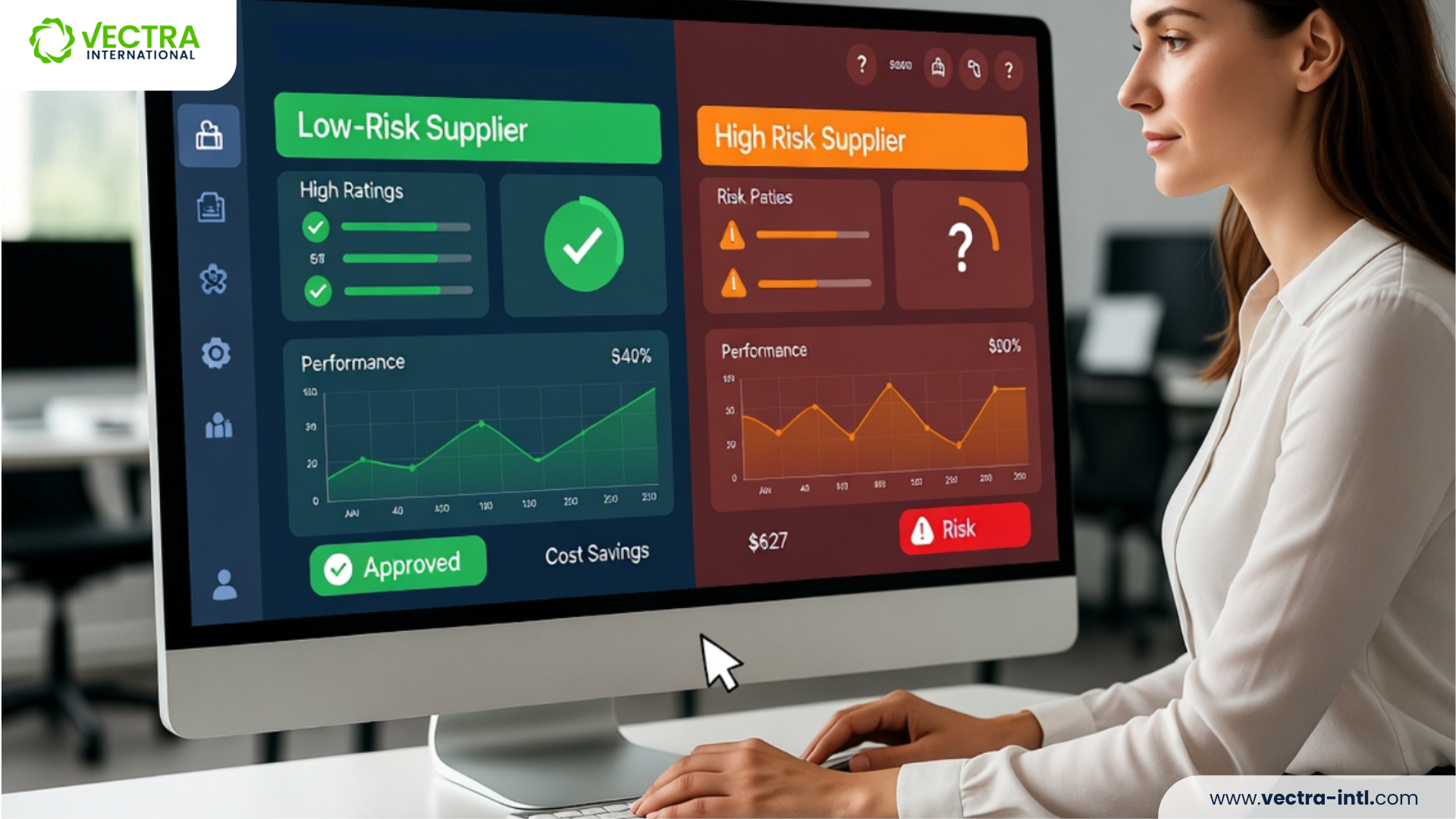
What the EU is actually doing is introducing a more risk-tiered enforcement model:
- low-risk jurisdictions may benefit from streamlined procedures,
- while high-risk sourcing regions will face deeper scrutiny.
In practice, this creates a strong commercial incentive to prioritize sourcing from jurisdictions perceived as lower compliance risk.
This is where sourcing strategy becomes directly tied to regulatory architecture.
The Strategic Shift: Risk-Based Sourcing
Historically, sourcing decisions were primarily driven by:
- cost,
- quality,
- production capacity,
- and logistics efficiency.
In 2026, regulatory risk is becoming equally influential.
The EUDR simplification review effectively encourages companies to ask:
“Is this supplier located in a jurisdiction that increases our compliance burden?”
This changes procurement dynamics significantly.
Two suppliers offering similar pricing may no longer be operationally equal if one requires substantially higher due diligence costs and regulatory oversight.
As a result, sourcing strategies are increasingly becoming:
- geography-sensitive,
- traceability-driven,
- and compliance-weighted.
Why This Matters for Retailers and Manufacturers
For retailers and manufacturers operating large multi-tier supply chains, the implications are substantial.
Simplified procedures may reduce administrative pressure for certain sourcing routes — but they also increase the importance of accurate supplier classification and mapping.
Organizations must now determine:
- which suppliers qualify as low-risk,
- which products fall into enhanced scrutiny categories,
- and how evolving EU classifications affect sourcing continuity.
This becomes particularly important for commodities such as:
- palm oil,
- coffee derivatives,
- and processed agricultural inputs.
Even where procedures become simpler, due diligence obligations remain legally enforceable.
Supplier Mapping Is Becoming a Competitive Advantage
One of the biggest operational lessons from EUDR implementation has been the importance of supplier visibility.
Many organizations discovered they lacked:
- accurate origin data,
- sub-tier supplier visibility,
- geolocation traceability,
- or standardized documentation structures.
The simplification review does not reduce the need for this visibility.
In fact, it increases its strategic importance.
Why?
Because companies that can quickly identify:
- low-risk sourcing zones,
- compliant suppliers,
- and verifiable traceability pathways
will gain operational flexibility and lower compliance costs.
Meanwhile, companies with fragmented supplier data may struggle to adapt as regulatory classifications evolve.
The Hidden Risk: Over-Reliance on “Low-Risk” Jurisdictions
There is another strategic consideration emerging from the review:
supplier concentration risk.
As more companies gravitate toward “simplified” sourcing jurisdictions, organizations may unintentionally create:
- overdependence on limited supplier pools,
- reduced geographic diversification,
- and greater exposure to localized disruptions.
This creates a paradox:
the safest compliance route may also increase operational vulnerability if diversification weakens.
Supply chain resilience therefore remains essential.
The goal should not be:
“source only from low-risk jurisdictions.”
The goal should be:
“build sourcing networks that balance compliance efficiency with operational resilience.”
The Operational Priorities for 2026
To adapt successfully, organizations should focus on five key actions:
1. Re-Evaluate Supplier Mapping
Update supplier classification frameworks to reflect emerging EUDR risk categories and sourcing exposure.
2. Strengthen Traceability Infrastructure
Simplified procedures still require credible evidence and verifiable sourcing data.
3. Build Dynamic Risk Segmentation
Supplier risk status may evolve over time based on EU assessments and geopolitical developments.
4. Integrate Compliance Into Procurement Strategy
Sustainability compliance can no longer operate separately from sourcing decisions.
5. Stress-Test Commodity Exposure
Palm oil, coffee, and agricultural derivatives may face increased scrutiny under updated implementation guidance.
The Bigger Picture: Compliance as Strategic Procurement
The EUDR simplification review signals a broader transformation in global trade governance.
Regulators are no longer simply demanding transparency.
They are shaping sourcing behavior itself.
This means compliance is becoming:
- operational,
- financial,
- and strategic.
Organizations that treat EUDR as a documentation exercise may struggle with rising complexity over time.
Organizations that integrate compliance into procurement architecture will be better positioned to:
- reduce regulatory exposure,
- improve sourcing agility,
- and strengthen long-term supply chain resilience.
Final Thought
The EUDR simplification review is not reducing the importance of due diligence.
It is redefining where scrutiny will be concentrated.
In 2026, the competitive advantage will belong to organizations that can:
- rapidly identify sourcing risk,
- maintain credible traceability,
- and adapt procurement strategies as regulatory expectations evolve.
Because under the new compliance landscape, sourcing decisions are no longer judged only by cost efficiency.
They are judged by risk intelligence.
View Related Posts
Why is “Geopolitical Reshoring” Increasing Your Hidden Governance Risks in 2026?
The “Dual-Materiality” Gap: Why Reporting Isn’t Risk Management
VECTRA International is a global expert in Supply Chain Risk & Responsibility. We positively impact businesses, their workers, and communities by helping create better, more efficient supply chain workplaces.
Chaussée de Wavre 1517B, 1160 Brussels, Belgium.