For more than a decade, supply chain resilience has been treated as a geographic equation.
If risk increased in one region, the response was straightforward:
- shift production
- diversify sourcing
- add a secondary location
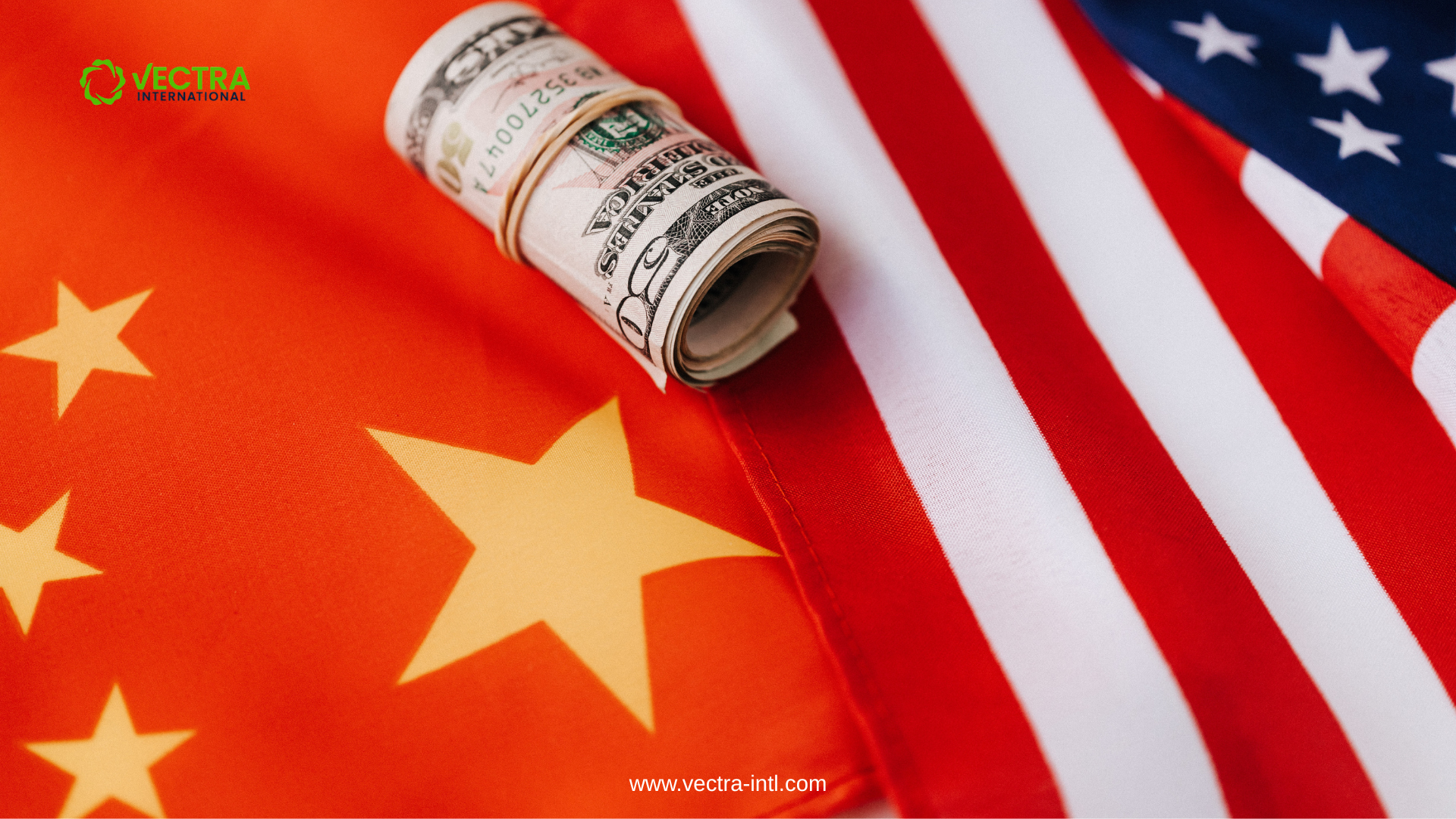
The strategy became widely known as “China + 1.”
And for a time, it worked.
It reduced dependency, created optionality, and gave organizations a sense of control in an increasingly complex global environment.
But in 2026, that model is no longer sufficient.
Because the nature of risk has changed.
The Disruptions That Geography Can’t Solve
Recent disruptions across critical trade corridors—particularly in the Middle East and the Red Sea—have exposed a structural weakness in traditional resilience strategies.
At the same time:
- tariff volatility has doubled year-over-year as of March 2026
- regulatory pressure is increasing across multiple jurisdictions
- supply chain disruptions are becoming more frequent and less predictable
These are not isolated shocks.
They are systemic shifts.
And they reveal a critical truth:
Risk is no longer confined to a single geography. It moves across interconnected systems.
When shipping routes are disrupted, it affects suppliers across multiple regions.
When tariffs change, cost structures shift globally.
When regulatory scrutiny increases, compliance risk propagates through entire supply networks.
In this environment, simply adding another country to your sourcing strategy does not eliminate risk.
It redistributes it—often in ways that are harder to detect and manage.
The Illusion of Diversification
At first glance, diversification appears to create resilience.
More suppliers. More locations. More flexibility.
But in practice, many organizations have built supply chains that are:
- geographically distributed
- but operationally fragmented
Different regions operate with:
- different supplier networks
- different compliance standards
- different data systems
- different levels of visibility
This creates an illusion of control.
Because while the network has expanded, the organization’s ability to understand and govern it has not kept pace.
When Complexity Becomes Risk
The unintended consequence of geographic diversification is complexity.
Every new supplier introduces:
- new data sources
- new dependencies
- new compliance requirements
- new operational variables
Without a unified framework to manage this complexity, companies face a growing challenge:
They cannot answer critical questions in real time:
- Which suppliers are exposed to current geopolitical risks?
- How does a tariff shift impact total landed cost across regions?
- Are alternative suppliers compliant and audit-ready?
- Can sourcing be adjusted without introducing new risk?
When these questions cannot be answered quickly and confidently, resilience breaks down.
Because resilience is not about having options—it’s about knowing which options you can trust.
Why “China + 1” Breaks Under Pressure
The core assumption behind “China + 1” is simple:
If you reduce dependence on one geography, you reduce risk.
But that assumption ignores a critical factor:
Risk does not disappear when you move it. It becomes harder to see.
By adding new suppliers and regions without improving visibility, organizations create:
- hidden dependencies
- inconsistent standards
- fragmented data environments
In effect, they trade one visible risk for multiple invisible ones.
And invisible risk is far more dangerous.
The Shift: From Geographic Diversification to Diversified Governance
To navigate today’s environment, companies need to rethink resilience entirely.
The focus must shift:
From:
- where suppliers are located
To:
- how suppliers are governed, monitored, and understood across the entire network
This is the concept of Diversified Governance.
What Is Diversified Governance?
Diversified Governance is not about adding more suppliers.
It is about building the capability to:
- apply consistent standards across all suppliers, regardless of location
- maintain visibility across multiple tiers of the supply chain
- reconcile data across systems, regions, and partners
- make decisions based on trusted, unified information
It transforms resilience from a geographic strategy into an operational capability.
The Core Challenge: Fragmented Data
At the heart of the problem is data.
Most organizations operate with supply chain data that is:
- siloed across systems
- inconsistent across regions
- incomplete across supplier tiers
- difficult to reconcile
This fragmentation makes it nearly impossible to build a coherent, real-time understanding of the supply chain.
Without that understanding:
- risk cannot be accurately assessed
- decisions cannot be made with confidence
- resilience cannot be achieved
The Vectra Perspective: Building Resilience Through Data Control
This is where the conversation shifts from strategy to infrastructure.
Because in today’s environment, resilience is not achieved through geography.
It is achieved through data control.
1. From Fragmentation to a Unified Supply Chain View
Vectra integrates data across:
- procurement systems
- logistics platforms
- compliance tools
- supplier networks
This creates a single source of truth for supply chain operations.
Instead of managing multiple disconnected datasets, organizations gain a unified view that reflects actual conditions.
2. From Tier-1 Visibility to Multi-Tier Insight
Traditional supply chain management focuses on direct suppliers.
But risk often exists deeper:
- sub-tier manufacturers
- raw material sources
- indirect dependencies
Vectra enables organizations to map these relationships, providing visibility across multiple tiers.
This is critical for identifying hidden exposure.
3. From Reactive Response to Proactive Risk Management
Without integrated data, companies respond to disruption after it occurs.
With real-time visibility, they can:
- detect risk signals early
- assess impact quickly
- evaluate alternative options with confidence
This shifts resilience from reactive to proactive.
4. From Location-Based Risk to System-Level Governance
Instead of managing risk based on geography, Vectra enables organizations to:
- enforce consistent standards across all suppliers
- validate compliance across regions
- ensure data integrity across the entire network
This creates a supply chain that is resilient regardless of where it operates.
The Strategic Advantage: Agility With Confidence
The goal of Diversified Governance is not just stability.
It is agility.
The ability to:
- shift sourcing strategies quickly
- respond to geopolitical changes
- adapt to evolving cost structures
But agility alone is not enough.
Agility without confidence creates risk.
To move quickly without increasing exposure, organizations need:
- trusted data
- consistent governance
- clear visibility
What Leading Organizations Are Doing Now
Forward-looking companies are already evolving their approach.
They are:
- investing in data integration across supply chain systems
- building traceability into supplier relationships
- standardizing governance frameworks across regions
- prioritizing data reconciliation and validation
They recognize that:
The ability to understand the supply chain is becoming more important than the ability to expand it.
Final Thought: You Can’t Outrun What You Can’t See
In a world of geopolitical volatility, speed is critical.
But speed without visibility creates fragility.
You cannot respond to disruption faster than you can understand it.
And understanding depends on:
- unified data
- consistent systems
- reliable insights
Without these, even the most diversified supply chain becomes vulnerable.
The Bottom Line
“China + 1” was a strategy built for a simpler era.
Today’s environment demands something fundamentally different.
Not more suppliers.
Not more locations.
But more control.
Because resilience is no longer about where your supply chain operates.
It is about whether you can:
- see it clearly
- understand it completely
- and act on it with confidence
Across every region, every supplier, and every disruption.
View Related Posts
Geopolitical Resilience: Reshoring as a Compliance Strategy, Not Just Logistics
Beyond “Tick-the-Box”: Driving ROI Through Factory Performance Improvement