Summary
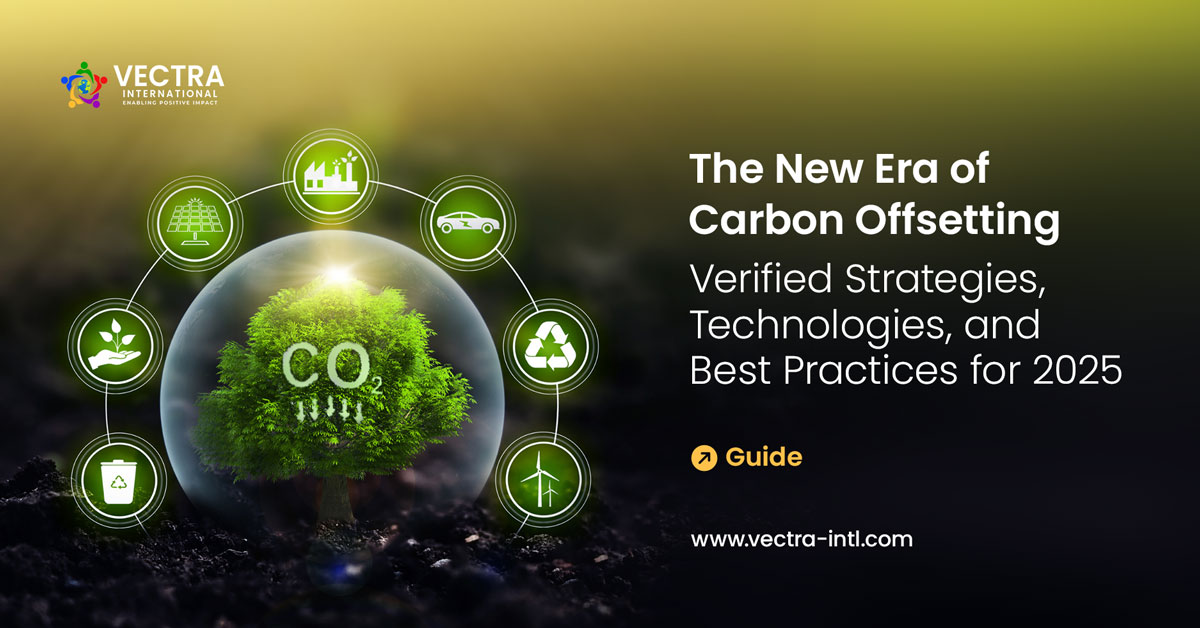
The carbon offsetting landscape has evolved dramatically over the past decade, moving from a fragmented market with quality concerns to a sophisticated ecosystem of verified, high-impact climate solutions.
As organizations worldwide commit to net-zero targets, the demand for credible carbon offsets has driven unprecedented innovation in project development, verification standards, and impact measurement technologies.
Introduction
Carbon offsetting is undergoing significant transformation, with new standards improving project quality, verification processes, and environmental integrity. Recent improvements include enhanced monitoring technologies, stricter additionality requirements, and permanent carbon removal solutions.
The voluntary carbon market reached $2 billion in 2023, with high-quality offsets commanding premium prices as companies prioritize credible climate action.
Understanding Modern Carbon Offsetting
Carbon offsetting allows organizations to compensate for unavoidable greenhouse gas emissions by investing in projects that reduce or remove an equivalent amount of CO₂ from the atmosphere.
It’s a crucial mechanism for companies aiming to achieve net-zero goals while contributing to broader global climate targets.
However, traditional offsetting has faced widespread criticism for:
- Low additionality: Funding projects that may have occurred anyway
- Permanence issues: Risk of re-release from forest fires or poor land management
- Inconsistent verification: Lack of standardized third-party validation
- Transparency gaps: Difficulty in tracking real-world impact
- Double counting risks: Credits claimed by multiple entities
To address these concerns, modern carbon offsetting strategies are evolving with more credibility and accountability. Key advancements include:
- Rigorous additionality assessments aligned with international best practices
- Improved permanence guarantees, especially in engineered carbon removal
- Standardized verification under frameworks like Verra, Gold Standard, and CORSIA
- Real-time MRV technologies (monitoring, reporting, and verification)
- Blockchain-enabled registries for transparent credit tracking and traceability
These innovations are helping companies turn offsetting from a reputational risk into a credible climate solution and a strategic ESG asset.
Key Advancements Elevating Carbon Offset Quality
As businesses commit to more ambitious climate goals, the focus has shifted from simply buying offsets to ensuring those offsets deliver real, measurable, and permanent environmental benefits. Here’s how today’s carbon offset ecosystem is raising the bar.
1. Stronger Additionality Standards
Additionality is the cornerstone of a credible offset—it confirms the emissions reduction wouldn’t happen without carbon financing. To improve integrity, modern frameworks now demand:
Stringent Testing Protocols:
- Baseline scenario modeling
- Financial and regulatory additionality assessments
- Barrier and common practice analysis
Dynamic Verification:
- Continuous validation of additionality over a project’s lifecycle
- Monitoring for policy or market shifts that might alter baseline assumptions
- Adaptive project management based on performance
2. Higher Permanence Expectations
Per the Oxford Offsetting Principles (2020), top-tier offsets must lock carbon away for a minimum of 100 years to be considered truly impactful.
Permanence Safeguards:
- Long-term storage commitments
- Buffer pools to hedge against potential reversals
- Legal frameworks and insurance products for added security
- Replacement guarantees in case of unplanned reversals
3. Advanced Monitoring, Reporting, and Verification (MRV)
Technology is transforming how offset quality is monitored and verified, moving from periodic manual audits to real-time, automated systems:
Satellite & Remote Sensing:
- Real-time land use and deforestation tracking
- Biomass measurement
- Fire detection and environmental risk alerts
IoT & Sensor-Based Data Collection:
- Soil carbon sensors
- Air and water quality monitors
- Biodiversity tracking and habitat condition tools
Blockchain Integration:
- Tamper-proof records and transaction history
- Transparent credit issuance and usage
- Built-in verification logic to reduce fraud and over-crediting
Together, these innovations are helping restore trust in carbon markets—making offsetting a viable, auditable tool in any organization’s ESG strategy.
Nature-Based Solution Improvements: Enhancing the Integrity of Carbon Offsets
As the carbon offset market matures, nature-based solutions have emerged as both high-impact and high-integrity strategies. With improved methodologies and advanced monitoring, these projects now offer greater transparency, permanence, and co-benefits — making them more attractive to companies seeking climate credibility.
1. Forest Carbon Projects
Forest-based offsets are significantly more robust today thanks to:
Methodological Advances
- Refined carbon stock and sequestration models
- Enhanced leakage prevention assessments
- Holistic biodiversity and ecosystem health evaluations
- Community engagement and socio-economic impact measurement
- Long-term sustainability and forest management planning
Technology Integration
- LiDAR and drone-based forest mapping
- AI-driven deforestation and biomass analysis
- Automated MRV (Monitoring, Reporting, and Verification) systems
- Predictive modeling for ecosystem trends
Projects using updated protocols show 40% higher additionality rates compared to legacy methods. (Nature-Based Solutions Alliance, 2023)
2. Regenerative Agriculture Offsets
Regenerative agriculture is gaining traction as a scalable, soil-based carbon sink. Quality improvements now include:
Soil Carbon Protocols
- Science-based, standardized carbon measurement frameworks
- Long-duration monitoring requirements
- Outcome-based crediting rather than practice-only metrics
- Resilience and risk mitigation assessments
Integrated Co-Benefits
- Biodiversity gains and pollinator support
- Water conservation and runoff improvement
- Livelihood enhancement for rural communities
- Food security support through sustainable yields
Technology-Based Offset Improvements: Driving Scalable, Verifiable Climate Impact
As organizations seek higher-quality offsets, technology-based carbon removal is emerging as a credible, scalable, and permanent solution. These innovations are closing the trust gap in voluntary carbon markets by offering verifiable, long-term CO₂ reductions that go beyond nature-based limitations.
1. Direct Air Capture (DAC) Integration
DAC technologies extract CO₂ directly from ambient air and store it permanently — making them one of the most advanced tools in carbon offsetting portfolios.
Permanent Carbon Removal Pathways:
- Deep geological sequestration
- Accelerated mineralization (e.g., carbon-infused rock formations)
- Industrial reuse in concrete, chemicals, and fuels
- Advanced long-term MRV (monitoring, reporting, and verification) systems
According to the IEA, DAC costs have dropped from $600/ton in 2020 to a projected $200/ton by 2025 — making this technology commercially viable for climate-conscious enterprises. (IEA Direct Air Capture Report, 2023)
2. Bioenergy with Carbon Capture and Storage (BECCS)
BECCS combines bio-based renewable energy with CO₂ capture, creating a dual climate benefit: sustainable power generation and permanent emissions removal.
Integrated Climate and Economic Value:
- Renewable electricity generation using agricultural or forestry waste
- Carbon capture and deep underground storage
- Grid balancing and decentralized energy support
- Economic development in rural and biomass-rich regions
Quality and Sustainability Safeguards:
- Verified sustainable biomass sourcing
- Lifecycle emissions assessments to confirm net-negative impact
- Long-duration storage verification
- Demonstrated additionality and transparent co-benefit reporting
Strengthening Trust: Offset Registry and Standard Advancements
The credibility of carbon offsets hinges on robust verification, transparency, and accountability. As demand grows for high-integrity carbon credits, leading registries and innovative platforms are stepping up with enhanced standards and blockchain-driven transparency.
Leading Registry Enhancements
1. Verra Verified Carbon Standard (VCS) Upgrades
The world’s largest voluntary carbon standard is tightening its frameworks to ensure higher environmental integrity and reporting accuracy.
Key Improvements:
- Rigorous project validation and audit protocols
- Enhanced permanence and leakage assessments
- Stricter monitoring frequency and depth
- Comprehensive co-benefit quantification (e.g., biodiversity, social impact)
- Transparent, standardized impact disclosures
2. Gold Standard 2.0
Known for its sustainable development alignment, Gold Standard now integrates a holistic climate and social lens.
Key Features:
- Explicit focus on gender equity and community impact
- Local stakeholder consultations as part of project approval
- Development of inclusive benefits and participatory governance
- Broader assessment of environmental and economic outcomes
Blockchain-Based Offset Registries
The emergence of blockchain registries is transforming how carbon credits are tracked, traded, and trusted—making fraud-resistant, real-time transparency the new norm.
Transparency Benefits:
- Immutable ledgers for every credit issued and retired
- Real-time visibility into credit ownership and retirement status
- End-to-end traceability and supply chain auditability
- Tamper-proof, verifiable project data
Efficiency Gains:
- Reduced overhead from automated smart contract verification
- Faster credit issuance and registration
- Seamless integration with trading platforms and digital MRV systems
- Increased liquidity and trust in carbon markets
Corporate Offset Strategy Enhancements: From Cost Center to Climate Asset
As carbon markets mature, leading companies are evolving their approach to offsets—from one-off transactions to strategic procurement frameworks that prioritize quality, permanence, and business alignment.
Quality-First Carbon Offset Procurement
Top-performing organizations are moving away from generic credits and investing in high-integrity offsets that deliver measurable climate and societal impact.
Key Selection Criteria:
- Projects with verified additionality and low reversal risk
- Permanent carbon removal (e.g., geological storage, regenerative systems)
- Certified by leading registries (Verra, Gold Standard)
- Proven co-benefits: biodiversity, local livelihoods, water security
- Aligned with community engagement and equity goals
Diversified Offset Portfolios:
- Geographic diversification to spread climate and political risk
- Mixed technology solutions (nature-based, DAC, BECCS) for resilience
- Vintage year balancing to optimize cost and compliance readiness
- Blended offset types for compliance and voluntary markets
- Adjusted procurement based on performance and permanence risk
Internal Carbon Pricing: Linking Finance and Climate
High-impact businesses are embedding internal carbon pricing mechanisms into financial planning to steer climate-aligned investment.
Strategic Integration Measures:
- Aligning offset procurement with internal carbon budgets
- Prioritizing emissions reduction before offsetting
- Informing capital expenditure decisions based on carbon ROI
- Measuring business unit performance using emissions-adjusted KPIs
- Driving innovation through cost-of-carbon accountability
Long-Term Contracting for Offset Certainty
To secure price stability and long-term climate outcomes, organizations are shifting to multi-year offset agreements.
Contracting Innovations Include:
- Forward purchase agreements (FPAs) for volume and cost certainty
- Performance-based payments tied to verified climate outcomes
- Quality assurance clauses (e.g., additionality, permanence thresholds)
- Contracts with trusted developers to de-risk climate investments
- Long-term partnerships to co-develop or finance carbon projects
Tackling Offset Criticism: How Quality Improvements Are Building Trust
The voluntary carbon market has long faced criticism for enabling greenwashing and delivering unclear climate benefits. However, leading registries, project developers, and corporate buyers are responding with transparency, accountability, and science-backed enhancements.
Fighting Greenwashing with Transparency and Accountability
Clear, consistent communication is essential to rebuild trust in carbon offsetting. Today’s best practices go far beyond vague sustainability claims.
Key Measures for Greenwashing Prevention:
- Publicly accessible project databases with validation and verification records
- Detailed impact measurement reporting including carbon removal methodology
- Independent third-party audits of both environmental and social claims
- Stakeholder engagement frameworks involving local communities and experts
- Ongoing project updates and real-time performance tracking
Best Practices for Credible Offset Communication:
- Using science-based emissions data in public disclosures
- Acknowledging project limitations and uncertainty
- Highlighting verified co-benefits (biodiversity, water, livelihoods)
- Demonstrating long-term commitments to climate action
- Publishing progress via transparent reporting protocols
Raising the Bar on Additionality Verification
Ensuring true additionality—that the carbon reductions wouldn’t happen without carbon finance—is fundamental to offset integrity.
Enhanced Testing Frameworks:
- Counterfactual scenario analysis to determine project dependence on offset revenues
- Evaluation of financial and regulatory barriers
- Assessment of current market norms and practices
- Review of regional policy landscapes
- Identification of implementation constraints
Ongoing Monitoring Enhancements:
- Continuous project performance tracking against baseline conditions
- Dynamic baselines that adjust to real-world developments
- Monitoring impacts of policy shifts and regulatory changes
- Adaptive management protocols to ensure continued additionality
- Periodic audits and re-verification for long-term validity
Best Practices for Carbon Offset Procurement: Building High-Integrity Portfolios
As corporate climate commitments scale, so does the pressure to procure credible, measurable, and high-impact carbon offsets. The effectiveness of any offset strategy hinges on robust due diligence, transparent verification, and dynamic portfolio management.
Establishing a Strong Due Diligence Framework
To ensure environmental integrity and avoid reputational risks, organizations must apply a comprehensive due diligence process before selecting offset projects.
Key Components of Offset Project Assessment:
- Methodology Evaluation: Ensure projects follow recognized carbon accounting protocols (e.g., VCS, Gold Standard)
- Additionality Verification: Validate that emissions reductions wouldn’t occur without carbon finance
- Permanence Assessment: Assess risk of reversal and storage durability
- Co-Benefit Analysis: Evaluate added social, biodiversity, and economic impacts
- Project Risk Evaluation: Review geographic, political, and climate-related risks
Verification and Standards Checklist:
- Projects registered with accredited registries (e.g., Verra, Gold Standard)
- Independent third-party validation and ongoing monitoring
- Transparent and standardized reporting protocols
- Regular audits and public documentation
Strategic Offset Portfolio Management
A well-balanced offset portfolio helps mitigate risk, improve performance tracking, and adapt to evolving regulatory requirements.
Diversification Strategies:
- Geographic Distribution: Mitigate region-specific regulatory or environmental risks
- Technology Mix: Blend nature-based and technology-driven offsets for flexibility
- Vintage Year Spread: Balance immediate impact with long-term removal guarantees
- Variety in Risk Levels: Include projects with varying risk-return profiles
- Optimized Pricing: Combine low-cost credits with premium, high-impact projects
Ongoing Performance Monitoring:
- Impact Measurement: Track verified emissions reductions and co-benefits
- Cost-Effectiveness Analysis: Ensure offsets align with internal carbon pricing and budget targets
- Risk Re-Evaluation: Monitor project performance and adjust strategy accordingly
- Stakeholder Feedback: Engage internal and external stakeholders for transparency and trust
- Continuous Improvement: Update procurement policies in line with evolving best practices and standards
How VECTRA International Enhances Offset Strategy
Navigating the complex carbon offset landscape requires specialized expertise in project evaluation, risk assessment, and strategy development. Our Environmental Management System Risk Assessment provides comprehensive support for organizations seeking to implement credible, high-impact offset strategies.
Our expert consultants assist clients with offset procurement strategies, project due diligence, portfolio optimization, and impact verification. Through VECTRA International’s guidance, organizations can build robust offset programs that deliver genuine climate impact while meeting stakeholder expectations and regulatory requirements.
Partner with VECTRA for your ESG strategy. Reach out to us today!
Conclusion
Carbon offsetting has undergone remarkable transformation, evolving from a fragmented market with quality concerns to a sophisticated ecosystem of verified, high-impact climate solutions. The improvements in standards, technologies, and practices have addressed many historical criticisms while creating opportunities for genuine climate action at scale.
The future of carbon offsetting lies in continued innovation, enhanced transparency, and rigorous quality standards that ensure environmental integrity while supporting global climate goals. Organizations that embrace these improvements and invest in high-quality offset portfolios will achieve credible climate neutrality while contributing meaningfully to global decarbonization efforts.