Summary
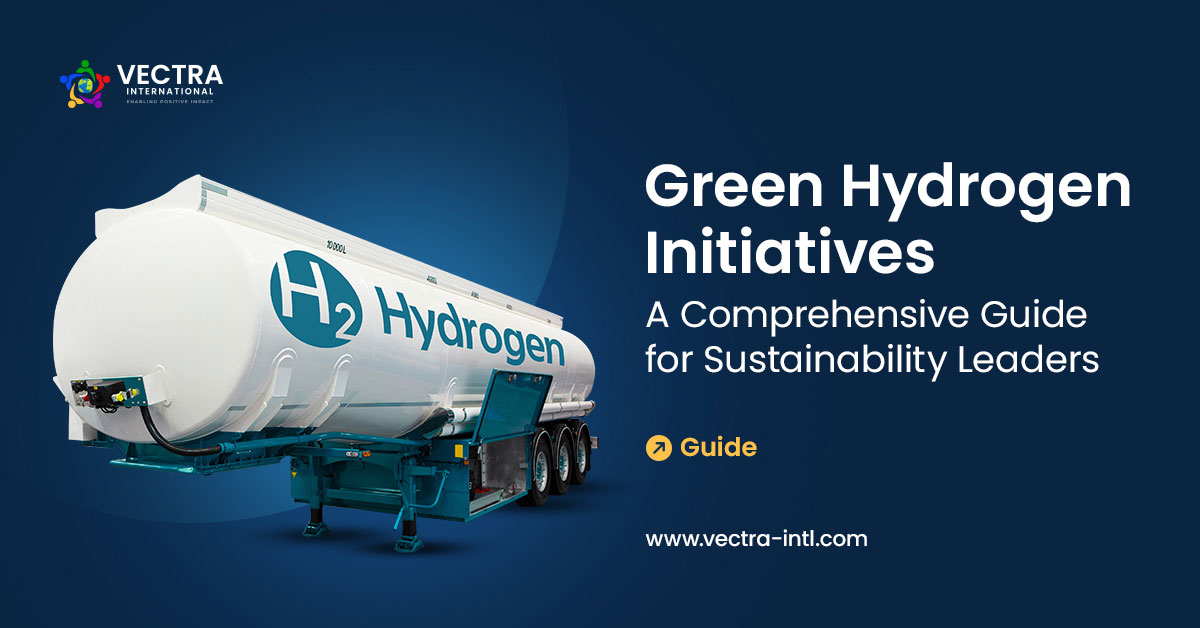
Green hydrogen, produced using renewable electricity, represents a zero-emissions alternative to fossil-based energy and fuels. Unlike grey hydrogen (from natural gas) or blue hydrogen (grey with carbon capture), green hydrogen is produced via electrolysis powered entirely by renewable energy, rendering its lifecycle emissions virtually zero.
As sustainability leaders and professionals, understanding the landscape of green hydrogen initiatives is key to aligning global energy trends with national, industrial, and corporate strategies.
Introduction
As global climate goals tighten and pressure mounts on hard-to-abate sectors, green hydrogen has emerged as a critical lever for deep decarbonization. Unlike grey or blue hydrogen, green hydrogen is produced using renewable energy, offering zero-carbon energy with enormous versatility across industries—from steel to shipping.
But turning promise into performance requires more than ambition. Viable green hydrogen projects demand precise execution, multi-stakeholder coordination, and robust infrastructure.
As sustainability leaders and ESG professionals track energy trends, green hydrogen initiatives deserve focused attention. Understanding where the momentum is building, how the ecosystem is evolving, and which partners can accelerate implementation is essential for future-proof strategies.
What Is Green Hydrogen and Why It’s Different
Green hydrogen is generated by using renewable electricity (from solar, wind, or hydro) to split water into hydrogen and oxygen via electrolysis. No fossil fuels are involved, making this the cleanest form of hydrogen available.
As regulatory pressure mounts and net-zero targets intensify, green hydrogen has emerged as a critical enabler of industrial decarbonization and clean energy transition. Especially in hard-to-abate sectors like steel, chemicals, and heavy transport.
Key Differentiators:
| Type | Source | Emissions |
| Grey Hydrogen | Natural gas | High |
| Blue Hydrogen | Natural gas + carbon capture | Moderate |
| Green Hydrogen | Renewable electricity | Zero |
Top 5 Leading Global Green Hydrogen Initiatives
As the global economy transitions toward decarbonization, nations are investing heavily in green hydrogen to fuel energy independence and industrial sustainability.
These flagship initiatives highlight how public-private collaboration is scaling innovation, infrastructure, and policy alignment to bring hydrogen into the mainstream.
| Initiative | Highlights |
| European Hydrogen Strategy | 10 Mt/yr by 2030; €470 bn investment |
| US Hydrogen Shot | DOE goal to reach $1/kg cost by 2031 |
| NEOM Green Hydrogen Project (Saudi Arabia) | 650 MW electrolyzer, 0.9 Mt H₂/yr for ammonia export |
| Hydrogen Energy Supply Chain (Australia–Japan) | Large-scale liquefied green hydrogen pilot |
| Germany’s National Hydrogen Strategy | 5 GW electrolysis by 2030; involvement in international imports |
Collectively, these initiatives showcase:
- Scaling electrolyzer capacity
- Lowering production costs
- Establishing hydrogen hubs
- Integrating hydrogen into hard-to-abate sectors
Key real-life Use cases of the green hydrogen
Green hydrogen is no longer a future concept—it’s actively reshaping high-emission industries by providing scalable, zero-carbon alternatives. Its flexibility across sectors makes it a cornerstone of deep decarbonization strategies.
| Sector | Application |
| Steelmaking | Direct reduction of iron ore (H₂ replaces coal) |
| Shipping | Green ammonia or methanol as marine fuel |
| Power grids | Seasonal storage and fuel cells |
| Aviation | Synthetic fuels for long-haul flights |
| Industrial Chemicals | Ammonia, methanol, and refining |
Making Green Hydrogen Viable: What You Need to Know
While the promise of green hydrogen is immense, its viability hinges on a strategic mix of cost, infrastructure, and policy alignment. Success is driven by access to abundant, low-cost renewable energy—solar, wind, or hydro—paired with proximity to major industrial users or export hubs.
Projects located near ports or energy-intensive sectors like steel, chemicals, or shipping enjoy significant logistical and commercial advantages.
Government incentives and robust energy infrastructure also play a critical role. Regions with supportive regulatory frameworks, grid capacity, and water accessibility are rapidly emerging as hydrogen hubs.
Cost Trajectory: Where We Stand Today
Currently, the cost of green hydrogen ranges between $3 to $6 per kilogram. However, aggressive global targets aim to bring this below $2/kg by 2030. Achieving this will require scale in electrolyzer deployment, continued reductions in renewable electricity costs, and integration of digital tools for operational optimization.
Certification: Ensuring Market Trust
As the market matures, certification frameworks are critical for traceability, trade, and investor confidence. Key schemes include:
How VECTRA International Elevates Green Hydrogen Projects
Green hydrogen is more than a clean energy source—it’s a complex, high-stakes infrastructure investment. VECTRA International helps organizations manage carbon emissions to enable them to navigate this complexity with precision, speed, and strategic clarity.
We offer targeted expertise that transforms hydrogen ambition into operational reality:
- Strategic Feasibility and Planning
From wind and solar site modeling to electrolyzer configuration and production yield forecasting, we provide the critical groundwork for successful project design—optimized for efficiency, scalability, and ROI.
- Permitting and Stakeholder Mapping
We help you engage the right stakeholders early and navigate environmental and social impact requirements across jurisdictions. Our structured approach reduces permitting delays and strengthens community alignment.
- Integrated Hydrogen Ecosystems
Hydrogen does not operate in isolation. VECTRA ensures seamless integration with storage systems, Power-to-X technologies, and grid infrastructure—building interconnected value across your sustainability portfolio.
Conclusion
Green hydrogen is no longer a distant aspiration. It’s rapidly becoming a cornerstone of global decarbonization strategies. From Europe’s hydrogen corridors to Saudi Arabia’s mega-projects, momentum is building.
Yet scaling green hydrogen isn’t just about ambition, it’s about precision, timing, and alignment with fast-evolving regulatory, technical, and geopolitical factors.
Success in this space requires more than technical feasibility. It demands a multidisciplinary strategy that integrates renewables, infrastructure, policy, and risk. Whether you’re entering the hydrogen space or scaling up existing projects, the right guidance can accelerate timelines, reduce execution risks, and unlock new ESG value.
VECTRA International provides that edge. With deep experience in sustainability-aligned infrastructure and a track record of supporting high-impact energy transitions.
If you’re planning a hydrogen project or looking to sharpen your strategy, now is the time to move from exploration to execution with a partner that understands the entire energy ecosystem.
Learn more about sustainability with VECTRA. Check out our VECTRA Marketplace.