As global supply chains become increasingly shaped by geopolitics, many organizations are facing a new compliance dilemma.
China’s recently implemented Decrees 834 (Industrial and Supply Chain Security) and 835 (Countering Improper Extraterritorial Jurisdiction) are creating new challenges for businesses that rely on Chinese suppliers while also complying with international ESG and due diligence requirements.
For companies preparing for regulations such as the Corporate Sustainability Due Diligence Directive (CSDDD), activities like supplier audits, supply chain mapping, and information gathering may now require additional scrutiny.
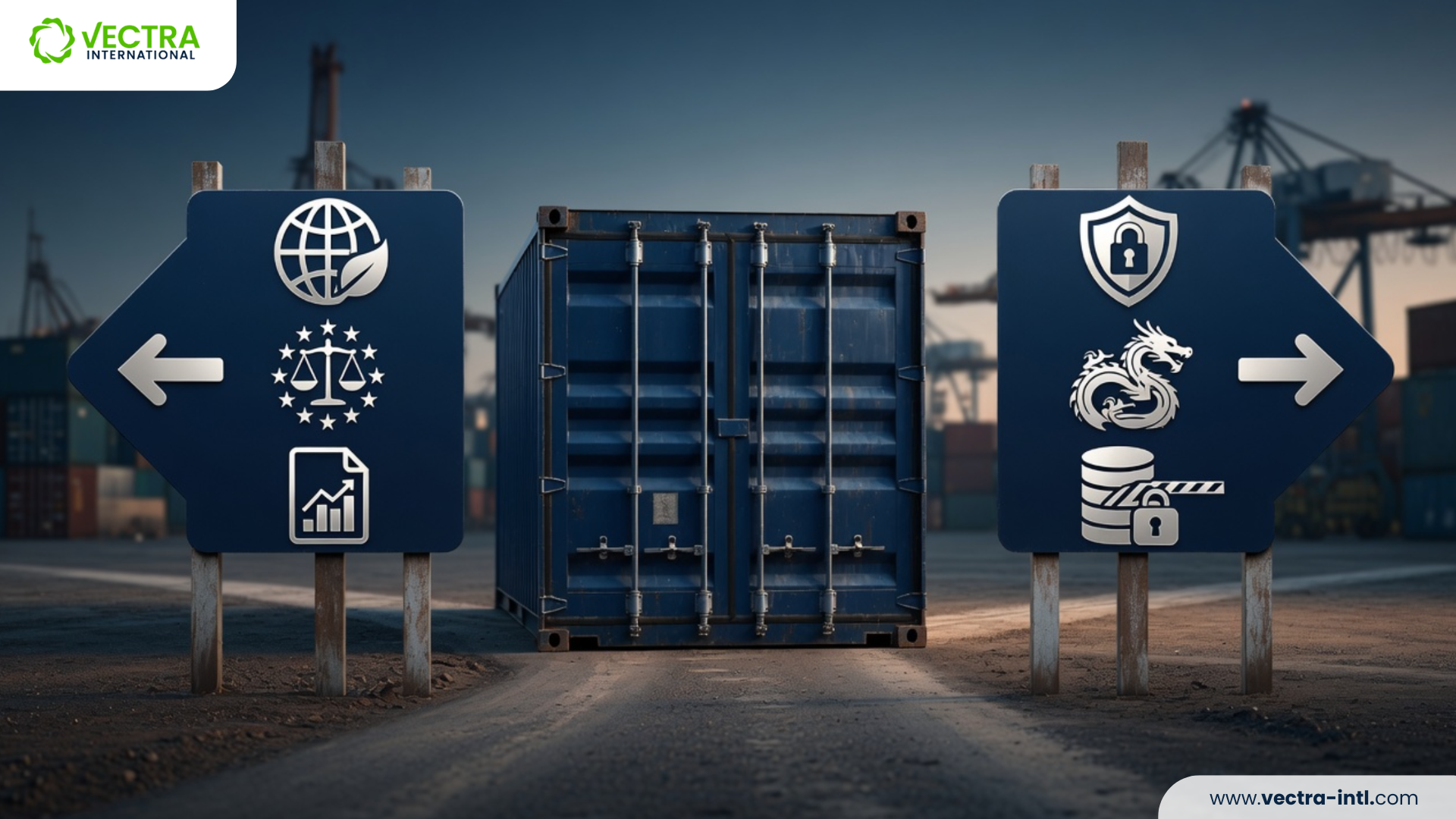
The challenge is no longer simply ESG compliance. The challenge is balancing compliance obligations across multiple jurisdictions while maintaining resilient supply chains.
Why China’s New Supply Chain Regulations Matter
Many sustainability and responsible sourcing frameworks depend on transparency.
Organizations are increasingly expected to:
- Conduct supplier due diligence
- Assess human rights risks
- Verify environmental performance
- Collect Scope 3 emissions data
- Demonstrate responsible sourcing practices
At the same time, China’s new regulatory framework places greater emphasis on industrial security, sensitive information protection, and oversight of certain information-sharing activities.
For businesses sourcing from China, this creates a more complex operating environment where regulatory expectations may not always align.
The Growing Challenge for ESG and CSDDD Compliance
Frameworks such as:
- CSDDD
- CSRD
- ESRS
- Forced labor regulations
- Customer ESG questionnaires
all require organizations to gather information from suppliers.
However, as geopolitical tensions increase, businesses must carefully evaluate how due diligence activities are conducted and what information is collected, transferred, and stored.
A compliance strategy focused only on ESG reporting may overlook broader geopolitical and regulatory risks.
Why Traditional Compliance Approaches Are No Longer Enough
Many companies still treat ESG compliance as a standalone reporting exercise.
Today’s reality is different.
Organizations must now manage:
- ESG compliance risk
- Supply chain disruption risk
- Regulatory uncertainty
- Data governance requirements
- Supplier concentration risk
The companies best positioned for long-term success are those that integrate compliance with broader supply chain resilience planning.
Building a More Resilient Supply Chain
Rather than focusing solely on audits and reporting, businesses should adopt a more holistic approach to supply chain management.
Key priorities include:
Supplier Diversification
Reducing dependence on a single sourcing region can improve resilience.
Regulatory Intelligence
Monitoring emerging regulations helps organizations anticipate risk before it becomes a disruption.
Supply Chain Visibility
Understanding supplier relationships beyond Tier 1 suppliers supports better decision-making.
Technology-Enabled Risk Management
Digital tools can improve supplier engagement, compliance tracking, and risk monitoring.
How VECTRA International Helps
At VECTRA International, we help organizations navigate the intersection of ESG compliance, responsible sourcing, and geopolitical risk.
Our ecosystem approach combines:
- Supply chain risk assessment
- ESG and human rights due diligence
- Regulatory intelligence
- Technology-enabled compliance solutions
- Supply chain resilience planning
Rather than viewing compliance as a standalone objective, we help businesses build flexible and legally sound supply chains that can adapt to changing global conditions.
Final Thoughts
China’s 2026 supply chain regulations highlight a growing reality for global businesses: supply chain management is increasingly influenced by geopolitics.
Organizations that focus only on ESG reporting may miss wider operational and regulatory risks.
Those that integrate compliance, resilience, and strategic supply chain planning will be better positioned to manage uncertainty and maintain competitive advantage.
As regulatory expectations continue to evolve, building resilient supply chains is becoming just as important as meeting compliance requirements.
Frequently Asked Questions About China’s 2026 Supply Chain Regulations
How do China’s new supply chain regulations affect ESG compliance?
Companies conducting supplier audits and due diligence activities may need to carefully assess how information is collected, shared, and managed within China.
What is the main risk for global businesses?
The primary challenge is navigating potentially overlapping regulatory expectations between international ESG requirements and local supply chain security regulations.
Which companies are most affected?
Businesses with manufacturing, sourcing, or supplier relationships in China are likely to experience the greatest impact.
How can companies reduce geopolitical supply chain risk?
Supplier diversification, stronger supply chain visibility, regulatory monitoring, and resilience planning can help reduce exposure.
How can VECTRA International help?
VECTRA supports organizations with supply chain risk management, ESG compliance, responsible sourcing programs, and resilience strategies designed for today’s evolving geopolitical landscape.
View Related Posts
How Companies Can Reduce ESG Data Fatigue Across Multiple Reporting Frameworks
Why is the Shift from “Static” to “Predictive” Risk Scoring Critical in 2026?
VECTRA International is a global expert in Supply Chain Risk & Responsibility. We positively impact businesses, their workers, and communities by helping create better, more efficient supply chain workplaces.
Chaussée de Wavre 1517B, 1160 Brussels, Belgium.
A Note on Our Visuals: At VECTRA, we combine human expertise with advanced technology. Some of the supportive imagery in this article was generated using artificial intelligence tools like Google Gemini. We ensure all conceptual AI assets align with our brand standards and accurately reflect our data.