For many organizations in 2026, the pressure is coming from every direction.
- Inflation continues to squeeze operational margins.
- Geopolitical fragmentation is increasing sourcing volatility.
- Energy and logistics costs remain unpredictable.
- Regulatory expectations are intensifying.
- Workforce instability is disrupting productivity.
In response, many companies are entering another cycle of aggressive cost reduction.
But there is a growing strategic problem with this approach:
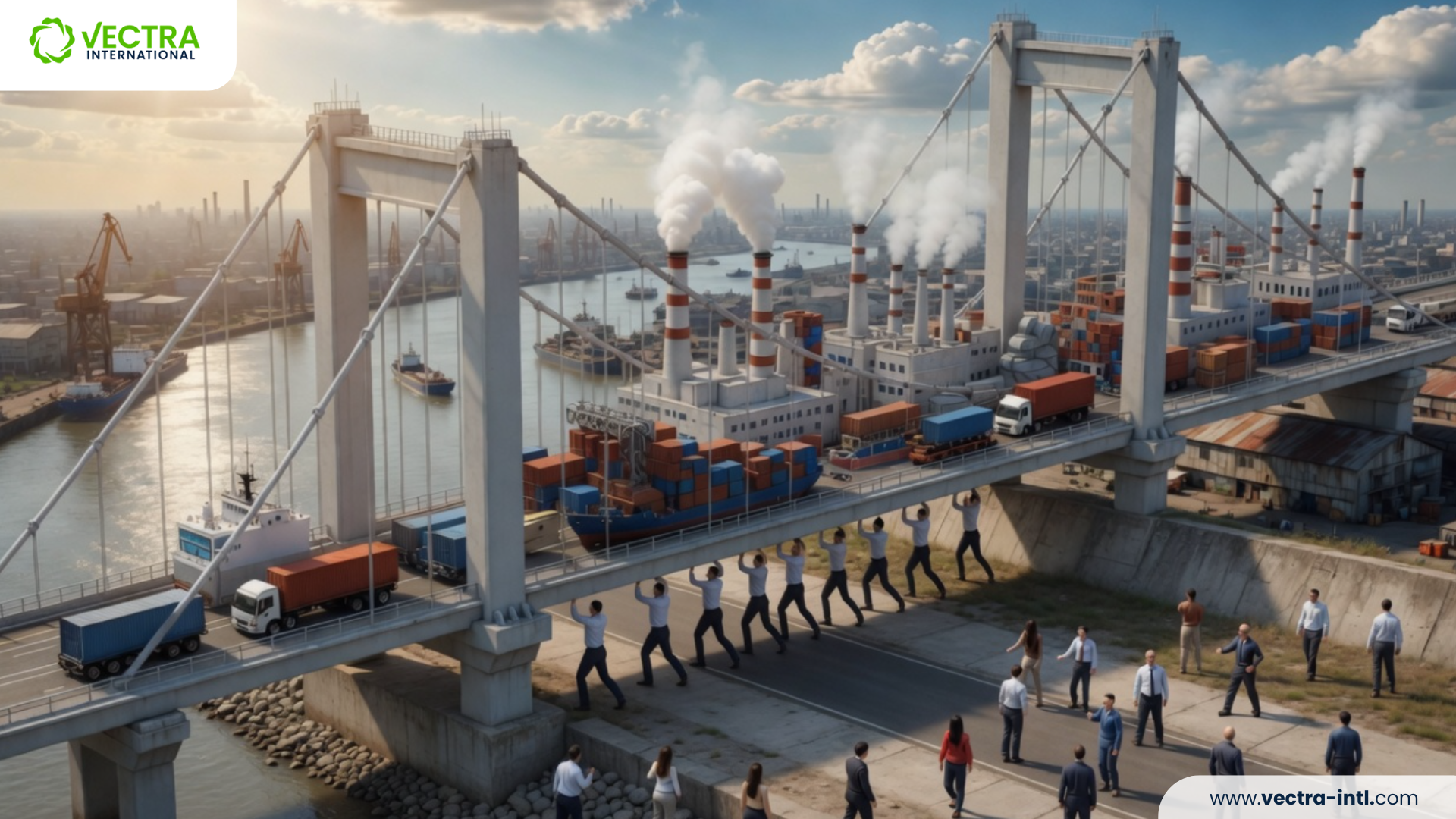
Organizations focused only on short-term cost containment may be weakening the very systems that protect long-term resilience.
The companies performing best under today’s pressure are not simply cutting costs faster.
They are investing more intelligently in operational stability, workforce conditions, and supply chain resilience.
And increasingly, leadership teams are recognizing an important reality:
Ethical operations and worker well-being are not separate from financial performance.
They are directly connected to it.
The False Divide Between Cost Efficiency and Sustainability
Historically, many organizations treated sustainability and worker welfare as:
- compliance obligations,
- ESG reporting exercises,
- or reputational initiatives.
During periods of economic pressure, these programs were often viewed as discretionary spending.
But the operational landscape has changed.
In today’s environment, poor working conditions are no longer just ethical concerns.
They are measurable business risks.
The Operational Cost of Workforce Instability
Supply chains operate on consistency:
- stable production,
- reliable labor,
- predictable throughput,
- and operational continuity.
When workplace conditions deteriorate, those systems weaken quickly.
Issues such as:
- excessive worker turnover,
- poor worker-management communication,
- unsafe conditions,
- fatigue,
- and workplace harassment
directly affect:
- productivity,
- quality consistency,
- absenteeism,
- recruitment costs,
- and production reliability.
In many industries, labor instability is now becoming a hidden operational cost driver.
Why Leadership Must Reframe Resilience
Traditional resilience strategies focused heavily on:
- inventory buffers,
- supplier diversification,
- logistics redundancy,
- and geopolitical sourcing shifts.
Those remain important.
But resilience today also depends on something less visible:
workforce stability inside supplier operations.
Factories with stronger worker engagement and healthier labor environments tend to demonstrate:
- lower turnover,
- fewer disruptions,
- better production consistency,
- and higher long-term operational efficiency.
This is increasingly becoming a competitive advantage.
The ROI of Better Working Conditions
Research across manufacturing and supply chain operations consistently shows that improving workplace conditions can produce measurable operational gains.
Examples include:
- reduced employee attrition,
- fewer production stoppages,
- improved output quality,
- stronger workforce retention,
- and higher operational efficiency.
Even relatively targeted improvements — such as:
- strengthening worker-management dialogue,
- reducing workplace conflict,
- improving grievance systems,
- or addressing physical harassment risks
can significantly improve workforce stability.
The result is not simply ethical improvement.
It is operational resilience.
Why This Matters More in 2026
The current global environment is amplifying labor-related vulnerabilities.
Several forces are converging:
1. Inflationary Pressure
Workers facing economic stress are more sensitive to workplace conditions, wages, and treatment.
2. Geopolitical Shifts
Rapid sourcing diversification into new regions can increase oversight gaps and workforce instability.
3. Labor Shortages
Many manufacturing regions are facing tightening labor availability and rising competition for skilled workers.
4. ESG Scrutiny
Regulators, investors, and customers increasingly expect companies to demonstrate credible human rights and labor governance.
Ethical Operations Are Becoming Financial Strategy
This is where many leadership teams are reframing their thinking.
The old assumption was:
“Better labor practices increase costs.”
The emerging reality is:
“Poor labor practices increase operational instability.”
That distinction is critical.
Companies with weak labor environments often face:
- higher turnover,
- reduced productivity,
- inconsistent production quality,
- reputational exposure,
- and greater disruption risk.
Meanwhile, organizations investing in stronger workplace systems may experience:
- more stable output,
- lower replacement costs,
- better supplier continuity,
- and stronger long-term performance.
In other words:
responsible operations are increasingly becoming economically resilient operations.
Leadership’s Biggest Mistake: Treating ESG Separately from Operations
One of the most common governance failures is organizational fragmentation.
Sustainability teams manage ESG metrics.
Procurement manages suppliers.
Operations manage production targets.
Finance manages cost reduction.
But workforce conditions affect all of them simultaneously.
When ethical sourcing is treated separately from operational strategy, organizations miss the financial value of workforce stability.
Resilience requires integration.
What Leaders Should Prioritize Now
To strengthen resilience amidst rising cost pressure, organizations should focus on five priorities:
1. Measure Workforce Stability as an Operational KPI
Track:
- turnover,
- absenteeism,
- grievance trends,
- and workforce engagement
alongside production metrics.
2. Strengthen Worker-Management Dialogue
Communication systems often act as early warning indicators for operational instability.
3. Integrate ESG Into Procurement Decisions
Supplier selection should evaluate operational resilience and workforce stability — not cost alone.
4. Identify Hidden Productivity Risks
Factories with unresolved labor issues may create downstream disruption risk even if short-term output appears strong.
5. Treat Ethical Operations as Risk Mitigation
Human rights governance is increasingly part of supply chain continuity planning.
The Competitive Advantage of Resilient Supply Chains
The next generation of resilient organizations will not necessarily be those with the lowest labor costs.
They will be the companies capable of maintaining:
- stable production,
- trusted supplier relationships,
- resilient workforces,
- and operational continuity during disruption.
In a volatile global economy, workforce resilience becomes business resilience.
And increasingly, ethical governance becomes operational strategy.
Final Thought
The pressure to reduce costs in 2026 is real.
But leadership teams focused only on immediate financial efficiency risk overlooking a deeper truth:
Supply chain resilience is built not only through systems and sourcing networks — but through the stability, engagement, and reliability of the people operating them.
Organizations that recognize this connection early will be better positioned to navigate inflation, geopolitical volatility, and long-term operational uncertainty.
Because in today’s environment, resilient supply chains are not simply leaner.
They are smarter, more transparent, and more human-centered.
View Related Posts
Why Do Most Corrective Action Plans (CAPs) Fail Before They Are Even Implemented?
The “Dual-Materiality” Gap: Why Reporting Isn’t Risk Management
VECTRA International is a global expert in Supply Chain Risk & Responsibility. We positively impact businesses, their workers, and communities by helping create better, more efficient supply chain workplaces.
Chaussée de Wavre 1517B, 1160 Brussels, Belgium.