For decades, risk management has operated on a predictable rhythm.
Quarterly reviews.
Annual audits.
Periodic supplier assessments.
Static spreadsheets updated long after events occurred.
That operating model no longer matches reality.
In 2026, geopolitical shocks, climate disruptions, cyber incidents, and regulatory changes are unfolding faster than traditional governance systems can respond.
And increasingly, organizations are realizing something uncomfortable:
Static data has become dangerous data.
This is why AI agents are rapidly moving from experimental technology to operational necessity.
As agentic AI capabilities expand across procurement, compliance, and supply chain operations — with nearly 40% of enterprise applications now incorporating task-specific AI agents — the most forward-thinking organizations are shifting from:
periodic monitoring
to:
continuous intelligence.
And that shift is redefining governance itself.
The End of the 12-Month Audit Cycle
Historically, companies managed supplier and operational risk through:
- annual audits
- supplier questionnaires
- periodic compliance reviews
- manual escalation processes
The assumption was simple:
Risk changed slowly enough to evaluate periodically.
That assumption no longer holds.
Today:
- tariffs can change overnight
- border disruptions can halt production within hours
- sanctions lists evolve continuously
- extreme weather events can cripple logistics networks instantly
- suppliers can become financially distressed in weeks
A supplier assessed as “low risk” six months ago may already represent a critical exposure.
The problem is not lack of data.
It is the delay between:
- risk emergence
- risk detection
- organizational response
Why “Periodic Monitoring” Is Becoming a Governance Failure
In regulated industries especially, delayed visibility creates compounding risk.
By the time a traditional audit identifies a problem:
- inventory may already be blocked
- products may already be non-compliant
- regulators may already be investigating
- operational disruption may already be underway
This is why leading organizations are reframing AI not as:
a productivity tool
But as:
a governance infrastructure layer
Because governance without real-time visibility increasingly becomes governance without control.
What Makes AI Agents Different?
Traditional automation follows predefined rules.
AI agents operate differently.
Agentic AI systems can:
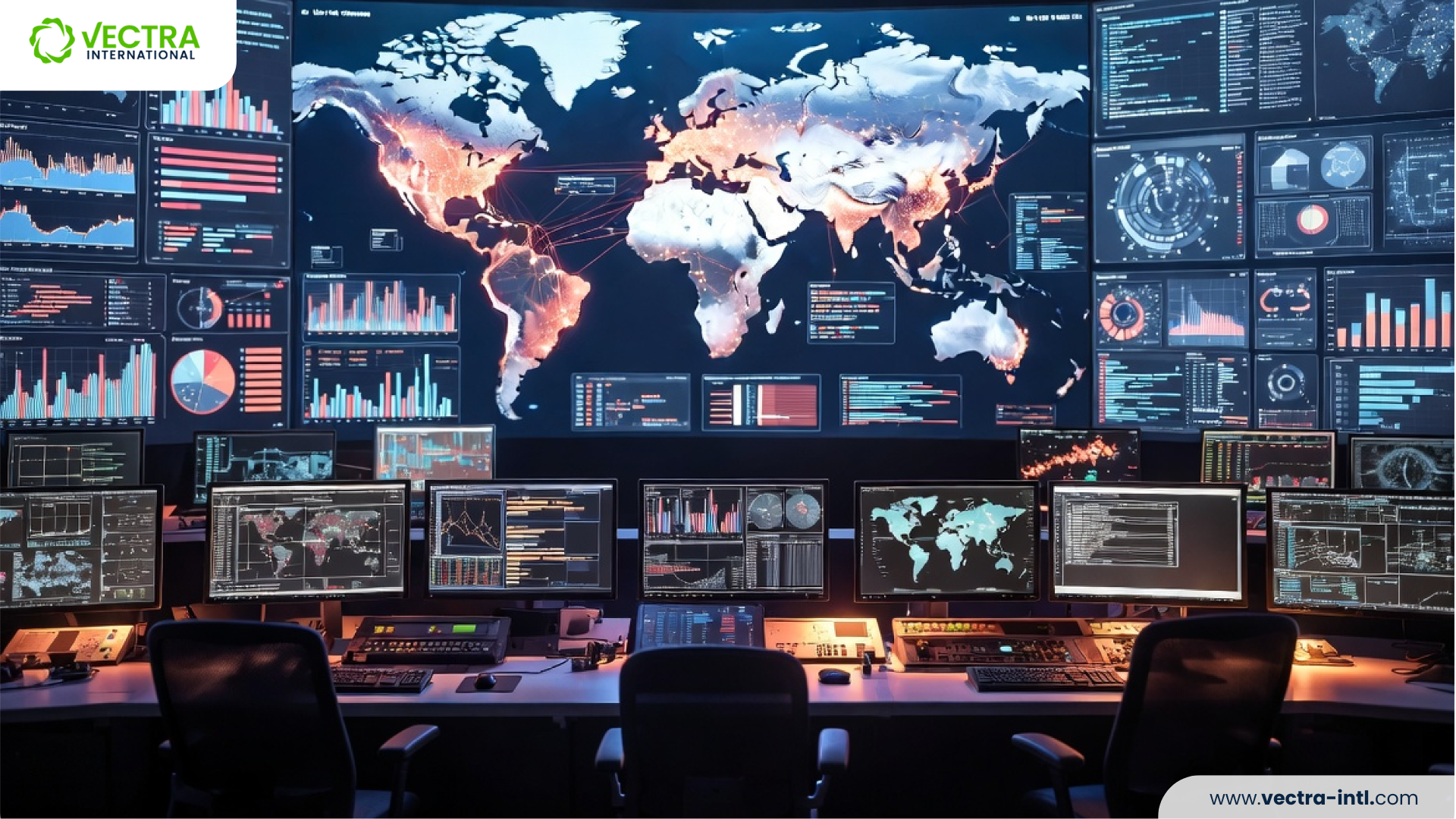
- monitor dynamic external environments
- interpret changing conditions
- trigger workflows autonomously
- continuously analyze interconnected data sources
- escalate anomalies in real time
Instead of waiting for human-led review cycles, AI agents function as:
persistent operational observers.
In procurement and supply chain environments, this means:
- continuous supplier monitoring
- live geopolitical risk detection
- automated compliance screening
- dynamic inventory risk analysis
- real-time logistics disruption mapping
The Strategic Shift: “Outside-In” Risk Visibility
One of the most important changes in 2026 is the rise of:
outside-in risk monitoring.
Historically, organizations depended heavily on:
- supplier surveys
- self-reported ESG questionnaires
- periodic declarations
The problem?
Suppliers often:
- respond slowly
- provide incomplete data
- lack visibility into their own sub-tier networks
AI agents are changing this model entirely.
Instead of waiting for suppliers to report issues, organizations can now:
- scan public trade data
- monitor sanctions updates
- detect climate and geopolitical disruptions
- identify ownership and supplier network changes
- infer sub-tier relationships through external signals
This allows companies to map risk:
beyond what suppliers voluntarily disclose.
Why Sub-Tier Visibility Is Becoming Critical
Most organizations still maintain strong visibility only into Tier-1 suppliers.
But major disruptions increasingly originate deeper in the network:
- raw material shortages
- politically exposed smelters
- vulnerable subcontractors
- financially unstable regional suppliers
The challenge:
Many companies do not even know these entities exist until disruption occurs.
AI agents can help identify hidden dependencies by continuously analyzing:
- shipment records
- customs data
- supplier relationships
- logistics patterns
- trade anomalies
This creates a much more dynamic understanding of supply chain exposure.
Climate and Geopolitical Risk Now Move Too Fast for Manual Governance
2026 is reinforcing a harsh operational reality:
Risk environments are no longer stable enough for static oversight.
A flood, drought, labor strike, or export restriction can reshape supply continuity within days.
Traditional governance systems struggle because they rely on:
- historical reporting
- human review bottlenecks
- delayed escalation chains
AI-driven monitoring changes the model from:
retrospective governance
To:
predictive governance
And increasingly, prediction is becoming a resilience advantage.
Why This Matters for Startups Too
Many startups assume continuous risk monitoring is only relevant for large enterprises.
That assumption is dangerous.
Startups often face:
- concentrated supplier dependencies
- lean procurement teams
- limited compliance resources
- fragile operational resilience
A single disruption can create existential consequences.
AI agents allow smaller organizations to:
- scale oversight capabilities
- automate supplier intelligence gathering
- monitor regulatory shifts continuously
- identify emerging vulnerabilities early
Without building massive governance teams.
The Real Risk: Human Systems Cannot Scale Fast Enough
The core challenge facing governance leaders is no longer:
“Do we have enough data?”
It is:
“Can humans process it quickly enough?”
The answer, increasingly, is no.
Manual governance models cannot continuously:
- monitor thousands of suppliers
- track geopolitical events globally
- assess regulatory changes in real time
- reconcile operational impacts instantly
AI agents are emerging because organizational complexity has outgrown human-only oversight systems.
What Continuous Monitoring Actually Looks Like
Leading organizations are deploying AI agents to:
1. Monitor Supplier Health Continuously
Financial distress, sanctions exposure, ownership changes, ESG controversies.
2. Detect Geopolitical Disruption Signals
Tariff changes, export restrictions, border congestion, labor unrest.
3. Map Sub-Tier Dependencies
Identifying hidden supplier relationships beyond Tier-1 visibility.
4. Trigger Automated Escalation Workflows
Sending alerts directly to procurement, compliance, or operations teams.
5. Support Real-Time Audit Readiness
Maintaining continuously updated documentation and evidence trails.
The Governance Shift Is Cultural, Not Just Technical
Many organizations still approach AI implementation as:
- a software upgrade
- an efficiency initiative
- a digital experimentation project
But the real transformation is organizational.
Continuous monitoring requires companies to rethink:
- decision-making speed
- escalation authority
- governance ownership
- operational accountability
Because when intelligence becomes real-time:
response expectations become real-time too.
Final Thought: Governance Is Becoming a Live System
The traditional governance model was designed for a slower world.
2026 is proving that world no longer exists.
In today’s environment:
- supply chains shift rapidly
- regulations evolve continuously
- geopolitical volatility spreads instantly
The companies that continue relying on periodic oversight may find themselves governing historical conditions — not present realities.
AI agents are not replacing governance teams.
They are becoming the infrastructure that allows governance to operate at the speed modern risk now demands.
Because increasingly, resilience is not determined by how often you review risk.
It is determined by how quickly you see it.
View Related Posts
CBAM’s “Definitive Phase”: Moving From Reporting to Paying
Why Do Most Corrective Action Plans (CAPs) Fail Before They Are Even Implemented?