For most organizations, supply chain risk has traditionally been managed in hindsight.
A disruption occurs. A supplier fails. A shipment is detained.
Teams mobilize, investigate, respond, and adapt.
This reactive model worked — when risks were slower, more localized, and largely operational.
But in 2026, that model is breaking down.
Trade restrictions can emerge overnight. Suppliers can be blacklisted without warning. Regulatory enforcement can escalate within days. And the consequences are no longer limited to logistics — they extend into compliance, market access, and investor confidence.
In this environment, resilience cannot be reactive.
It must be predictive.
And that is where AI-powered simulations and digital twins are fundamentally changing the game.
The New Risk Landscape: Blacklisting as a Systemic Shock
Supplier blacklisting is no longer a rare event.
It is becoming a recurring feature of the global trade environment, driven by:
- Forced labor enforcement
- Sanctions and export controls
- Environmental and ESG violations
- Geopolitical tensions
When a supplier is blacklisted, the impact is immediate and far-reaching:
- Goods may be detained at borders
- Contracts may become non-compliant
- Customers may demand assurances
- Regulators may initiate investigations
The challenge is not just the event itself.
It is the speed and complexity of its consequences.
Why Reactive Risk Management Is No Longer Enough
Traditional risk management approaches focus on:
- Identifying high-risk suppliers
- Monitoring compliance indicators
- Developing contingency plans
While necessary, these approaches have a critical limitation:
They do not simulate the system-wide impact of a disruption.
When a supplier is blacklisted, the effects cascade through:
- Multi-tier supply networks
- Product portfolios
- Regulatory obligations
- ESG disclosures
Without simulation, organizations are forced to respond in real time — often with incomplete information.
This leads to:
- Delayed decisions
- Increased compliance risk
- Suboptimal mitigation strategies
Enter Predictive Resilience: AI + Digital Twins
Predictive resilience is built on a simple idea:
Don’t wait for disruption to happen — simulate it in advance.
This is enabled by combining:
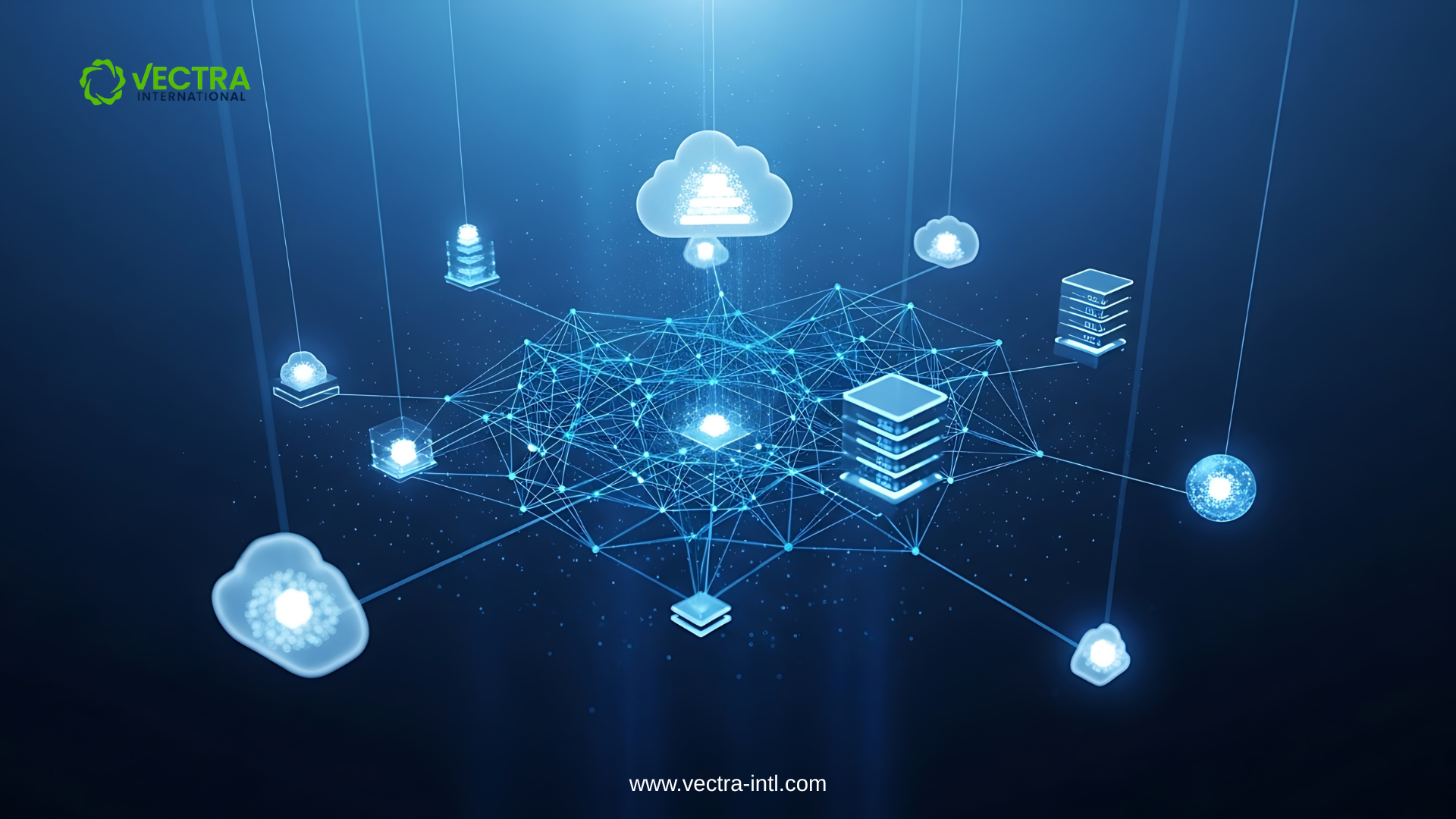
- Digital twins — virtual models of supply chains
- AI analytics — algorithms that process complex data and identify patterns
Together, they create a dynamic environment where organizations can:
- Model disruption scenarios
- Analyze potential outcomes
- Test response strategies
Not in theory — but with data-driven precision.
What Does a Supplier Blacklisting Simulation Look Like?
To understand the value of this approach, consider a typical use case.
Step 1: Build the Supply Chain Twin
The digital twin maps:
- Suppliers across multiple tiers
- Material flows and dependencies
- Logistics routes
- Product-level linkages
It also integrates:
- Compliance data
- ESG risk indicators
- Geographic and regulatory context
This creates a living model of the supply chain.
Step 2: Define the Blacklisting Scenario
Using AI, organizations can simulate a range of triggers, such as:
- A Tier 2 supplier flagged for forced labor
- A sanctions designation affecting a critical region
- A regulatory ban on specific materials
The selected supplier is then “removed” or flagged within the model.
Step 3: Analyze the Impact Cascade
The system evaluates:
1. Product Exposure
- Which products rely on the affected supplier?
- Which markets are impacted?
2. Compliance Exposure
- Are any shipments now non-compliant?
- What regulatory obligations are triggered?
3. Supply Chain Disruption
- Where do bottlenecks emerge?
- What is the impact on production timelines?
4. ESG Impact
- How does this affect sustainability metrics?
- What are the implications for disclosures and ratings?
Step 4: Simulate Response Strategies
AI models can then test alternative actions:
- Switching to different suppliers
- Rerouting logistics
- Adjusting production schedules
- Isolating affected product lines
Each scenario is evaluated across multiple dimensions:
- Speed
- Cost
- Feasibility
- Compliance integrity
The Key Advantage: Decision-Making Before the Crisis
The real power of predictive resilience lies in timing.
Instead of asking:
“What should we do now?”
Organizations can ask:
“What will we do when this happens?”
This enables:
- Pre-approved response plans
- Faster execution during disruptions
- Reduced uncertainty in decision-making
In high-pressure situations, this shift is critical.
Beyond Operations: Modeling Compliance Fallout
One of the most important evolutions in AI-driven simulations is the inclusion of compliance modeling.
Traditionally, simulations focused on:
- Inventory levels
- Lead times
- Cost impacts
Today, they must also address:
- Regulatory exposure
- Documentation requirements
- Audit readiness
- Market access risks
For example:
- Can you prove that affected products are compliant?
- How quickly can you produce chain-of-custody evidence?
- What disclosures must be updated under CSRD or similar frameworks?
These questions are now central to resilience.
The ESG Dimension: Predicting Reputational Impact
AI simulations also enable organizations to quantify:
- Exposure to high-risk suppliers
- Impact on ESG ratings
- Potential investor reactions
This is particularly important as ESG considerations become more tightly linked to:
- Capital allocation
- Customer expectations
- Brand value
Predictive models allow companies to understand:
Not just operational risk — but reputational and financial risk.
Why This Matters Now
The urgency behind predictive resilience is driven by several converging trends.
1. Increasing Volatility
Geopolitical shifts, trade restrictions, and regulatory changes are occurring more frequently and with less warning.
2. Rising Expectations
Customers, regulators, and investors expect companies to:
- Anticipate risks
- Demonstrate control
- Respond quickly and effectively
3. Technology Adoption
Industry data suggests that 75% of supply chain organizations are increasing investment in AI-driven capabilities this year.
This reflects a recognition that:
Traditional tools are no longer sufficient.
The Organizational Shift: From Visibility to Foresight
Over the past decade, companies have invested heavily in:
- Supply chain visibility
- Real-time tracking
- Data integration
These capabilities are foundational — but they are not enough.
The next step is foresight.
This means:
- Understanding not just where things are
- But what will happen under different scenarios
Predictive resilience builds on visibility to enable:
- Scenario planning
- Risk anticipation
- Strategic decision-making
The Implementation Challenge
Despite its potential, adopting AI-driven simulations requires careful planning.
1. Data Integration
Organizations must bring together:
- Operational data
- Supplier information
- Compliance and ESG data
Without integration, simulations lack accuracy.
2. Model Design
Effective simulations require:
- Clearly defined scenarios
- Relevant variables and assumptions
- Continuous refinement
3. Organizational Alignment
Outputs must be:
- Understood by decision-makers
- Integrated into planning processes
- Aligned with business objectives
Otherwise, simulations remain theoretical.
The Vectra Perspective: Simulating What Matters
From a Vectra standpoint, the value of predictive resilience is not just in technology.
It is in focus.
The key question is:
Are you simulating the risks that actually threaten your business?
This includes:
- Supplier blacklisting
- Regulatory enforcement actions
- ESG violations
- Trade disruptions
Because these are the events that:
- Halt operations
- Trigger compliance failures
- Impact market access
The Competitive Advantage: Preparedness at Scale
Organizations that invest in predictive resilience gain a significant advantage:
- Faster response times
- More informed decision-making
- Reduced compliance risk
- Stronger stakeholder confidence
In contrast, those that rely on reactive models face:
- Delays
- Uncertainty
- Increased exposure
Final Thought: The End of Reactive Resilience
The era of reactive supply chain management is ending.
In a world of rapid change and heightened scrutiny, waiting for disruption is no longer viable.
Resilience is no longer about recovery.
It is about anticipation.
AI and digital twins provide the tools to achieve this.
But the real shift is conceptual.
From:
- Managing events after they occur
To:
- Preparing for events before they happen
View Related Posts
The “S” in ESG: Quantifying Fair Wages in Fragmented Supply Chains
Nature is the New Carbon: Preparing for TNFD-Aligned Supply Chain Audits